

Among the eternal associates of Lord Sri Krishna Chaitanya Mahaprabhu, Shrivasa Pandita holds a very special position. He is known as the fifth member of the Pancha-tattva and represents the pure devotees of the Lord. His house in Navadvipa, known as Shrivasa Angan, became the sacred birthplace of the early Sankirtana movement where Sri Chaitanya Mahaprabhu performed ecstatic kirtans with His associates.
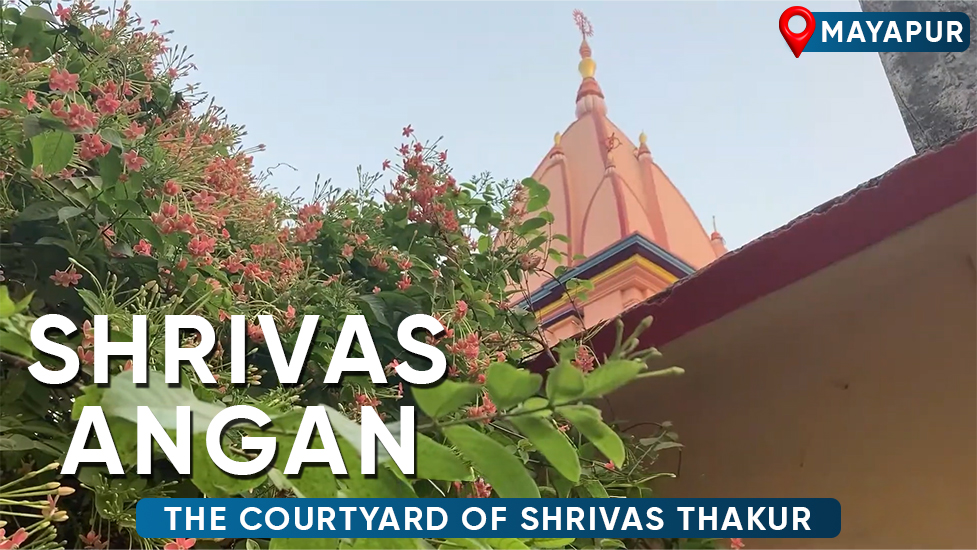
Shrivasa Pandita is glorified in Gaudiya Vaishnava scriptures as the incarnation of the great sage Narada Muni, the eternal preacher of devotion to Lord Krishna. Through his deep devotion, faith, and surrender to Mahaprabhu, Shrivasa Pandita became one of the most important participants in the divine pastimes of Lord Gauranga in Navadvipa.
Identity of Shrivasa Pandita
parvatakhyo muni-varo ya asin narada-priyah
shri-rama-panditah shriman tat-kanistha-sahodarah
namnambika vraje dhatri stanya-datri sthita pura
saiveyam malini namni srivasasa-grhini mata
This verse from Gaura-ganoddesha-dipika explains that Shrivasa Pandita is none other than the great sage Narada Muni who appeared in Lord Chaitanya’s pastimes. Narada’s dear friend Parvata Muni appeared as Shrivasa’s younger brother Ramai Pandita. Shrivasa’s wife Malini Devi was previously Ambika, the nurse of Lord Krishna in Vraja.
Early Life and Family
Shrivasa Pandita originally hailed from Sylhet in present-day Bangladesh. Later he moved to Navadvipa on the banks of the Ganges, which became the center of Lord Chaitanya’s pastimes.
He belonged to a respected Vedic Brahmin family. His father’s name was Shri Jaladhar Pandita. Shrivasa had four brothers:
- Shri Rama Pandita
- Shripati Pandita
- Shrinidhi Pandita
- Nalina Pandita (the eldest)
All four brothers were deeply devoted to Lord Krishna and constantly engaged in chanting the holy names, studying the Srimad Bhagavatam, and bathing three times daily in the sacred Ganges.
Nalina Pandita’s daughter Narayani later became the mother of Srila Vrindavana Dasa Thakura, the author of Chaitanya Bhagavata.
Prayer for the Appearance of the Lord
During that time Navadvipa was filled with proud scholars, atheistic logicians, and people who mocked devotional practices. Seeing this condition of society, Shrivasa Pandita and other great devotees such as Advaita Acharya prayed intensely for the Supreme Lord to descend and restore pure devotion.
Their prayers were soon answered when Lord Sri Krishna Himself appeared as Sri Chaitanya Mahaprabhu in the home of Jagannatha Mishra and Sachi Mata on the full moon day of Phalguna in 1486.
Shrivasa Angan – Birthplace of the Sankirtana Movement
Shrivasa Pandita’s residence in Navadvipa became famous as Shrivasa Angan. This sacred courtyard became the headquarters of Lord Chaitanya’s Hari-nama Sankirtana Movement.
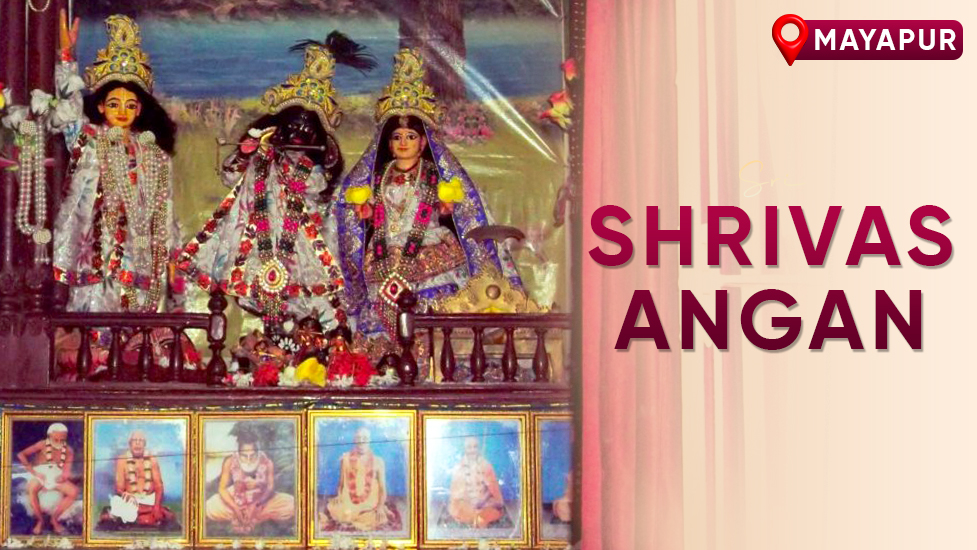
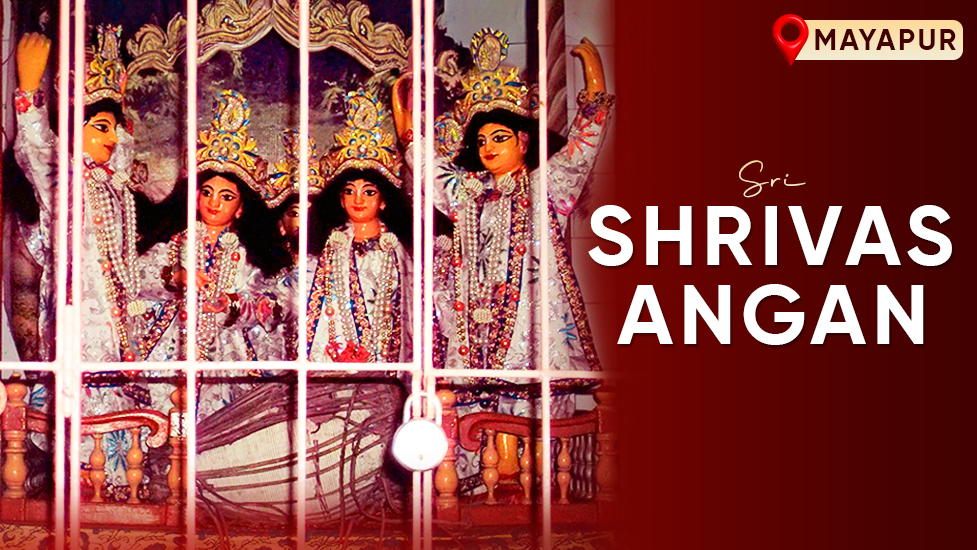
Every night Lord Gauranga, Nityananda Prabhu, Advaita Acharya, Gadadhara Pandita and other devotees gathered there to perform ecstatic kirtan. These kirtans continued throughout the night, filling the entire town with the chanting of the holy names of Krishna.
The courtyard was surrounded by large rooms and gardens and protected by a high wall. Inside this sacred place many confidential pastimes of Lord Gauranga were revealed.
Kazi Breaks the Mridanga
At one point, the Muslim magistrate known as the Chand Kazi tried to stop the Sankirtana movement. His men broke the sacred mridanga drum used in kirtan. Because of this incident the place became known as Khol Banga Danga — “the place where the mridanga was broken.”
Despite threats and restrictions against chanting, Shrivasa Pandita remained fearless and continued performing kirtan in his home.
The Story of Dukhi and Sukhi
One maidservant in Shrivasa’s house was named Dukhi, meaning “unhappy.” Every day she brought water from the Ganges for Mahaprabhu’s bath while watching His ecstatic dancing with tears of devotion.
Seeing her sincere service, Lord Chaitanya affectionately changed her name from Dukhi to Sukhi, meaning “happy,” teaching that those who serve the Lord and His devotees are never unhappy.
The Passing of Shrivasa’s Son
One of the most famous incidents revealing Shrivasa Pandita’s devotion occurred during a night of sankirtana in his house. While the devotees were chanting, Shrivasa’s only son passed away inside the house.
When the women began crying loudly, Shrivasa entered the room and told them to remain silent so that Mahaprabhu’s kirtan would not be disturbed. He said that hearing the holy name at the time of death guarantees liberation.
Later Mahaprabhu sensed something unusual and asked whether some tragedy had occurred. Eventually the devotees informed Him about the death of Shrivasa’s son.
Overwhelmed with emotion, Mahaprabhu went to the child’s body and called out to him.
By the Lord’s touch the child briefly returned to life and spoke profound spiritual words.
He explained that he had simply completed the destined time of his stay in that body and was now going elsewhere according to the will of the Lord. Hearing these words, everyone present became spiritually enlightened and their sorrow vanished.
Deeply moved by Shrivasa’s devotion, Lord Chaitanya declared:
“From today Nityananda and I will be your sons. We will never leave you.”
Shrivasa Pandita in Pancha-tattva
yato 'sau nandanandanah
bhakta-swarupo nityanando
vraje yah shri-halayudhah
bhakta avatara acharyo
'dvaito yah shri-sadasivah
bhakta-akhyah shrinivasa-adya
yatas te bhakta-rupinah
bhakta-shaktir dvi jagranyah
shri-gadadhara-panditah
In the Pancha-tattva philosophy, the five divine aspects of the Lord are described:
- Bhakta-rupa – Sri Chaitanya Mahaprabhu
- Bhakta-svarupa – Lord Nityananda
- Bhakta-avatara – Advaita Acharya
- Bhakta-shakti – Gadadhara Pandita
- Bhakta – Shrivasa Pandita representing the pure devotees
Shrivasa Pandita thus represents the entire community of devotees who serve the Lord with pure love and devotion.
Later Life
After Lord Chaitanya accepted sannyasa and moved to Jagannatha Puri, Shrivasa Pandita later resided in Kumarhatta (modern Halisahar). Every year he travelled to Puri to meet Mahaprabhu and also regularly visited Sachi Mata in Navadvipa.
Mahaprabhu once gave him a special blessing that there would never be poverty in his home and that whatever he required for devotional service would always arrive.
Spiritual Significance
Shrivasa Pandita represents the tatastha-jiva — the marginal living entity who becomes perfect through pure devotion to the Lord. His life demonstrates complete faith in Krishna’s will and absolute dedication to the service of the holy name.
Through the mercy of Shrivasa Pandita and the other associates of Lord Chaitanya, the Hari-nama Sankirtana movement spread throughout the world.
Conclusion
The life of Shrivasa Pandita teaches the highest example of unwavering devotion. Even in the face of personal loss, he placed the Lord’s service above everything else. His home became the birthplace of the Sankirtana movement, and his faith continues to inspire devotees around the world.
By remembering Shrivasa Pandita and the divine pastimes of Lord Chaitanya at Shrivasa Angan, devotees pray to develop the same deep faith, surrender, and love for the holy name of Krishna.


