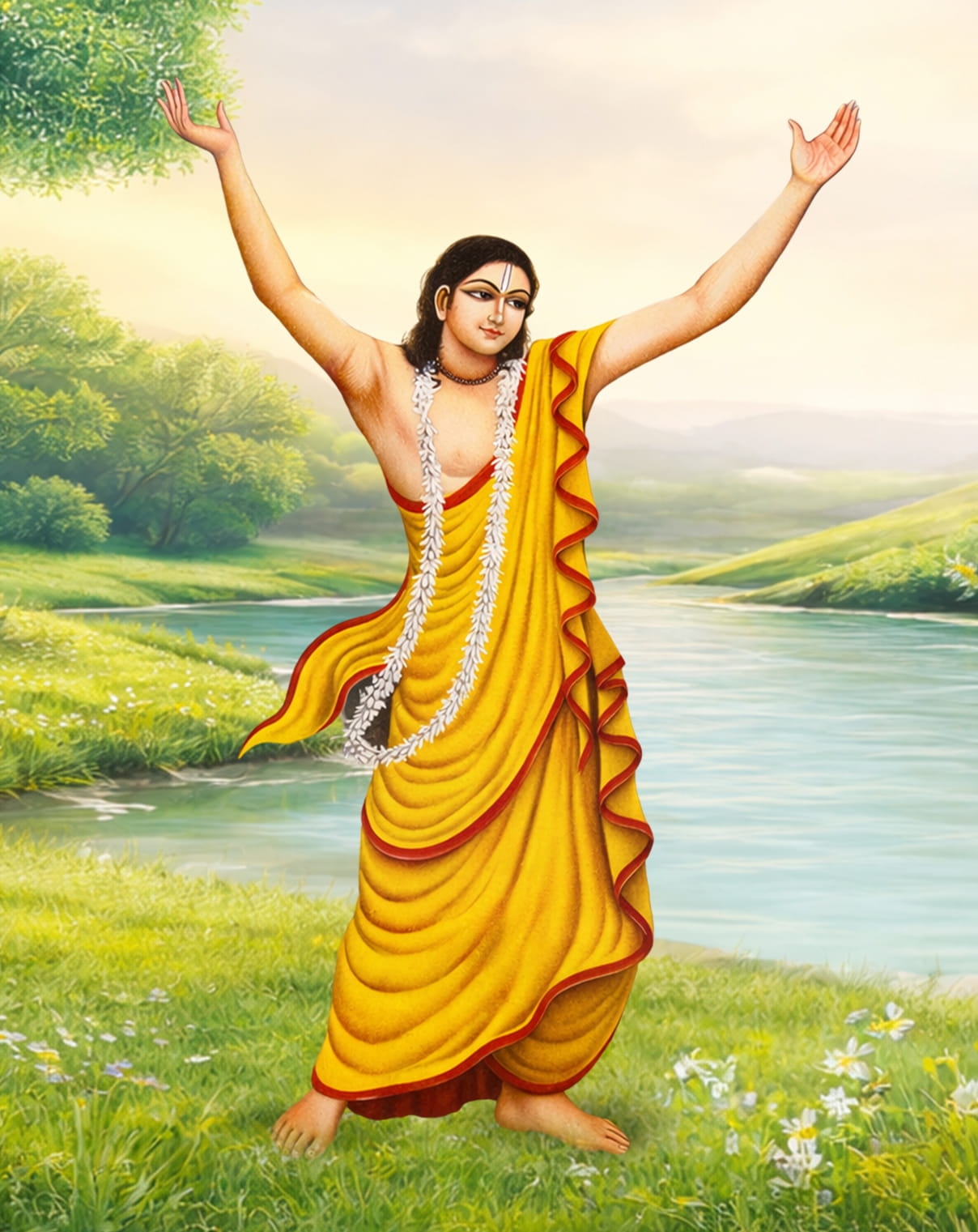
Disciple of Hridaya Chaitanya and student of Jiva Gosvami, who received Radharani's anklet and the Shyamasundara Deity and spread Gaudiya Vaishnavism throughout Odisha.

Biography
Śrī Śyāmānanda Prabhu, with Śrīnivāsa Ācārya and Narottama Dāsa Ṭhākura, carried the Gosvāmīs' teachings from Vṛndāvana to the east. Through his preaching, Gauḍīya Vaiṣṇavism spread throughout Orissa. He is famous for receiving Śrīmatī Rādhārāṇī's anklet, from which comes the distinctive Śyāmānandī tilaka, and for his Deity Śrī Śyāmasundara, now worshipped at the Rādhā-Śyāmasundara temple in Vṛndāvana, one of the seven principal Gosvāmī temples.
Duḥkhī
Śyāmānanda was born around 1535 at Dharenda in Orissa to Kṛṣṇa Maṇḍala and Durikā. Several of their children had died, so they named him Duḥkhī, the sorrowful one. From childhood he was drawn to Kṛṣṇa, and he left home to seek a spiritual master.
Initiation and Pilgrimage
At Ambikā Kālnā he was initiated by Hṛdaya Caitanya, a disciple of Gaurīdāsa Paṇḍita, and named Duḥkhī Kṛṣṇadāsa. He served his guru faithfully and then travelled widely across India on pilgrimage before reaching Vṛndāvana, where Hṛdaya Caitanya sent him to study under Jīva Gosvāmī.
Rādhārāṇī's Anklet
In Vṛndāvana Duḥkhī Kṛṣṇadāsa's service was to sweep the groves of Seva-kuñja. One morning he found a beautiful golden anklet and understood it belonged to Śrīmatī Rādhārāṇī. When a sakhī came looking for it, he would return it only to its owner. Lalitā-sakhī then touched the anklet to his forehead, leaving the mark that became the Śyāmānandī tilaka, and named him Śyāmānanda, one who gives joy to Śyāma. Rādhārāṇī also gave him the Deity of Śrī Śyāmasundara, received in 1578. In 1580 he arranged the divine marriage of Śyāmasundara with Rādhārāṇī, whose Deity had manifested in the treasury of the king of Bharatpur.
His Guru's Displeasure
When Hṛdaya Caitanya heard that his disciple's name and tilaka had changed, he was at first angry and came to Vṛndāvana to rebuke him. Śyāmānanda surrendered completely, and when his guru understood the divine origin of the change, he embraced him and gave his blessings.
Preaching in Orissa
After the book journey with Śrīnivāsa and Narottama, Śyāmānanda stayed for a time with Narottama at Kheturi and then went home to Orissa. There, with his foremost disciple Rasikānanda Murāri, he brought kings and landholders to Kṛṣṇa consciousness, including the landlords of Ghatshila and Govindapur, while Rasikānanda won the king of Mayurbhanj. They stopped animal sacrifice in many places, opened temples, and popularised the Reneti style of kīrtana. He attended the Kheturi festival with his followers.
Departure
Before leaving this world, Śyāmānanda named Rasikānanda his successor. His samādhi is at Narasiṅghapura in Orissa.
Sources
Compiled from the Bhakta Training Course chapters on the acharyas, with reference to Śrī Caitanya-caritāmṛta and Bhakti-ratnākara as cited there.
Teachings
Service to Rādhārāṇī Is the Highest Attainment
His anklet pastime shows that Rādhārāṇī's mercy comes through humble service in her groves.
Humble Service Is the Doorway to Mercy
He received the highest blessings while sweeping. No service is small when offered to Kṛṣṇa.
Surrender to the Guru
Even when his guru was angry, he responded only with surrender, and won his blessings.
Preach in Every Village
He and Rasikānanda carried the holy name throughout Orissa, to rulers and common people alike.
Give Up Violence in the Name of Religion
He persuaded many to stop animal sacrifice and worship Kṛṣṇa instead.
Qualities
These qualities of Śyāmānanda Prabhu are drawn from Bhakti-ratnākara and the history of the Rādhā-Śyāmasundara temple.
1. Humility
He swept the groves of Vraja as his service.
2. Obedience to Guru
He accepted his guru's anger without protest.
3. Love for Rādhārāṇī
He would return the anklet only to her, and received her Deity.
4. Preaching Zeal
He spread Gauḍīya Vaiṣṇavism across Orissa.
5. Courage
He stood before kings and armed landholders to preach.
Sources
Compiled from the Bhakta Training Course chapters on the acharyas, with reference to Śrī Caitanya-caritāmṛta and Bhakti-ratnākara as cited there.
Timeline
- 1535
c. 1535
Appearance
Dharenda, Odisha
Born to Krishna Mandala and Durika and named Dukhi.
Initiation by Hridaya Chaitanya
Ambika Kalna
Received the name Dukhi Krishnadas.
Studies under Jiva Gosvami
Vrindavan
Joined Srinivasa and Narottama as Jiva Gosvami's students.
Finds Radharani's anklet
Seva-kunja, Vrindavan
Received the name Shyamananda and the nupura tilaka from Lalita-sakhi.
- 1578
Vasanta Panchami, 1578
Receives Sri Shyamasundara
Nidhuvana, Vrindavan
Radharani gave him the Deity of Shyamasundara.
- 1580
Vasanta Panchami, 1580
Divine marriage of Shyamasundara
Vrindavan
Arranged the marriage of Shyamasundara with Radharani (Laliji).
Preaching in Odisha
Odisha
With Rasikananda converted kings and landowners throughout Odisha.
Disappearance
Narasinghapur, Odisha
Named Rasikananda his successor before departing.
Books
Vrindavana Parikrama
An account of the important holy places of Vraja.
Upasana-sara-sangraha
A rare work on devotional practice following Jiva Gosvami's outline.
The acharyas
All acharyasMore acharyas
Continue along the disciplic succession.

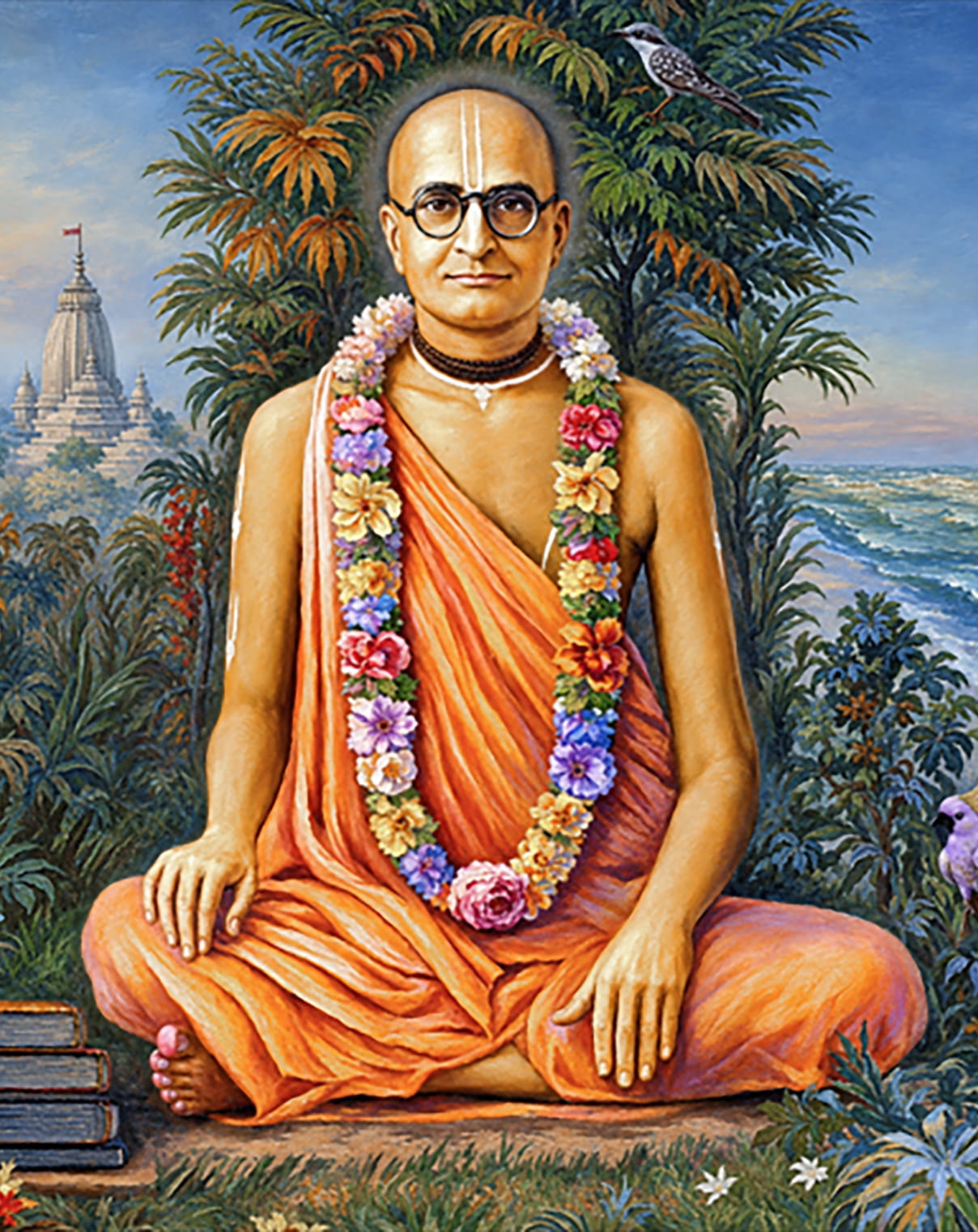
Srila Bhaktisiddhanta Sarasvati Thakura
Founder of the Gaudiya Math and spiritual master of Srila Prabhupada
6 February 1874 – 1 January 1937
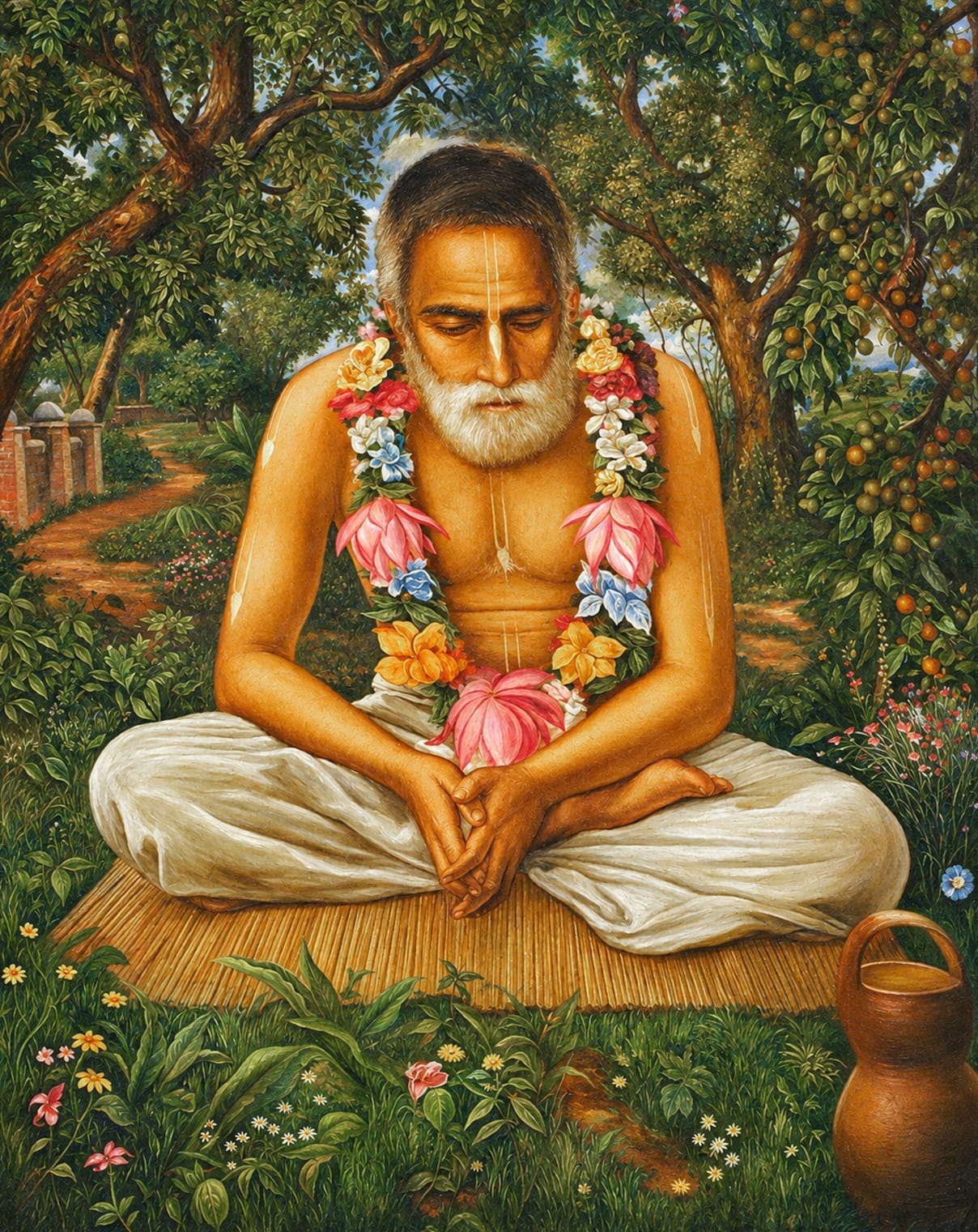
Srila Gaura Kishora Dasa Babaji Maharaja
Paramahamsa babaji and spiritual master of Bhaktisiddhanta Sarasvati Thakura
1830s – 17 November 1915 (Utthana Ekadashi)