
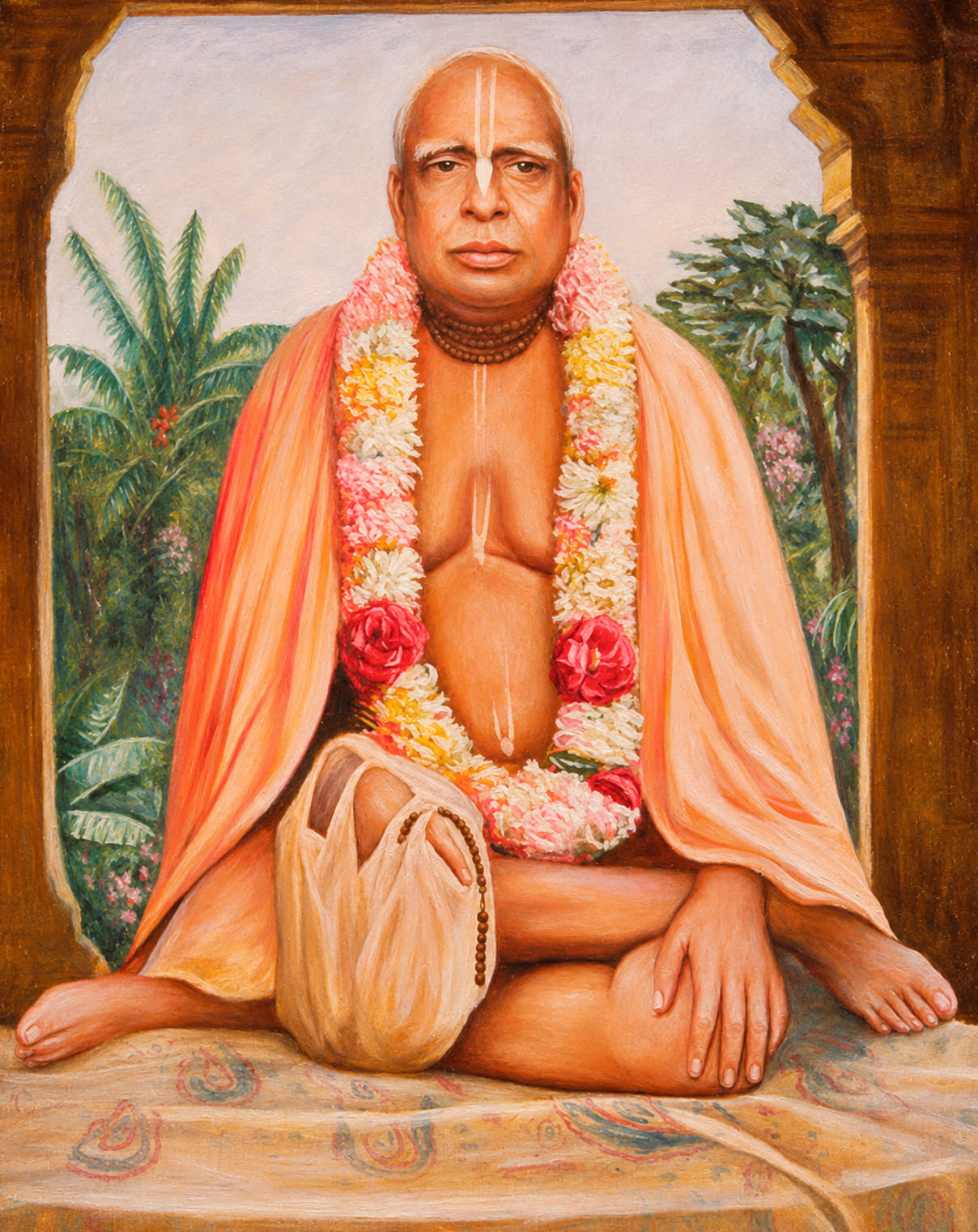
Magistrate, author and acharya who revived Lord Chaitanya's movement, discovered His birthplace at Mayapur, and sent His teachings to the West.
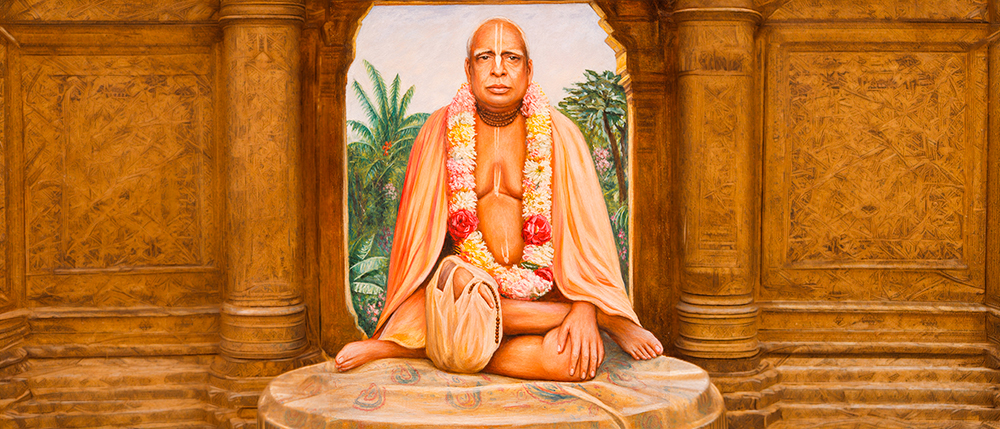
Biography
Srila Bhaktivinoda Thakura (1838-1914), born Kedarnath Datta at Birnagar (Ula) in Nadia, revived Lord Chaitanya's movement when its pure teachings had nearly been lost. While serving as a deputy magistrate and raising a large family, he wrote over a hundred books, songs and essays explaining the philosophy of Mahaprabhu and the Goswamis, including Jaiva Dharma, Sri Chaitanya Shikshamrita and Harinama Chintamani. With Jagannatha Dasa Babaji he identified Mahaprabhu's birthplace at Mayapur. He organised the nama-hatta preaching programme and first sent Lord Chaitanya's teachings to the West. He was the instructing guru of Gaura Kishora Dasa Babaji and the father of Srila Bhaktisiddhanta Sarasvati, through whom his mission spread worldwide. On 23 June 1914 he entered the Lord's eternal pastimes at Bhakti Bhavan in Calcutta; his samadhi is at Godruma, Navadvip.
Born Kedarnath Datta to Ananda-chandra Datta and Jagat-mohini Devi, he faced many hardships in youth and studied in Calcutta. He worked as a teacher in Odisha and then rose to deputy magistrate, serving in many districts. In Puri he stopped the false incarnation Bisakisen, and in Narail he began his great literary output. From 1885 his Chaitanya Press at Bhakti Bhavan published the Goswamis' works, and his magazine Sajjana-toshani spread their message. After retiring in 1894 he worshipped at Svananda-sukhada-kunja in Godruma and preached the nama-hatta throughout Bengal. In 1896 his Sri Gauranga-smarana-mangala reached McGill University in Canada.
Teachings
The holy name is the essence of Lord Chaitanya's teachings; Mahaprabhu's message is for all humanity; and a devotee is to be recognised by devotion, not by caste or outward dress.
Qualities
Scholarship, Purity, Tireless preaching, Humility, Exemplary householder life
Timeline
- 1838
2 September 1838
Appearance
Birnagar (Ula), Nadia
Born to Ananda-chandra Datta and Jagat-mohini Devi.
- 1866
5 February 1866
Appointed Deputy Magistrate
Chapra
Began his career as a government magistrate.
- 1874
Writes Datta-kaustubha
Puri
Composed 104 Sanskrit verses on Vaishnava philosophy.
- 1881
Begins Sajjana-toshani
Calcutta
Launched his Bengali spiritual journal.
- 1886
Literary outpouring and Vishva Vaishnava Sabha
Calcutta
Published the Gita with Rasika-ranjana and founded the Sabha.
- 1888
Discovers Lord Chaitanya's birthplace
Mayapur
Identified the Yogapitha as the Lord's birthsite.
- 1894
October 1894
Retires from government service
Calcutta
Devoted himself fully to preaching.
- 1895
21 March 1895
Deity installation at the Yogapitha
Mayapur
A grand installation ceremony was held on Gaura Purnima.
- 1896
Sends Lord Chaitanya's teachings West
Calcutta
Sri Gauranga-smarana-mangala reached McGill University.
- 1910
Enters seclusion
Bhakti Bhavan, Calcutta
Withdrew into uninterrupted bhajana.
- 1914
23 June 1914
Disappearance
Bhakti Bhavan, Calcutta
Departed at noon; his samadhi is at Godruma, Navadvip.
Lineage
Gurus and predecessors
- Guru
Srila Jagannatha Dasa Babaji Maharaja
Vaishnava Sarvabhauma, who confirmed Lord Chaitanya's birthplace
c. 1750 – Phalguna new moon, after 1897
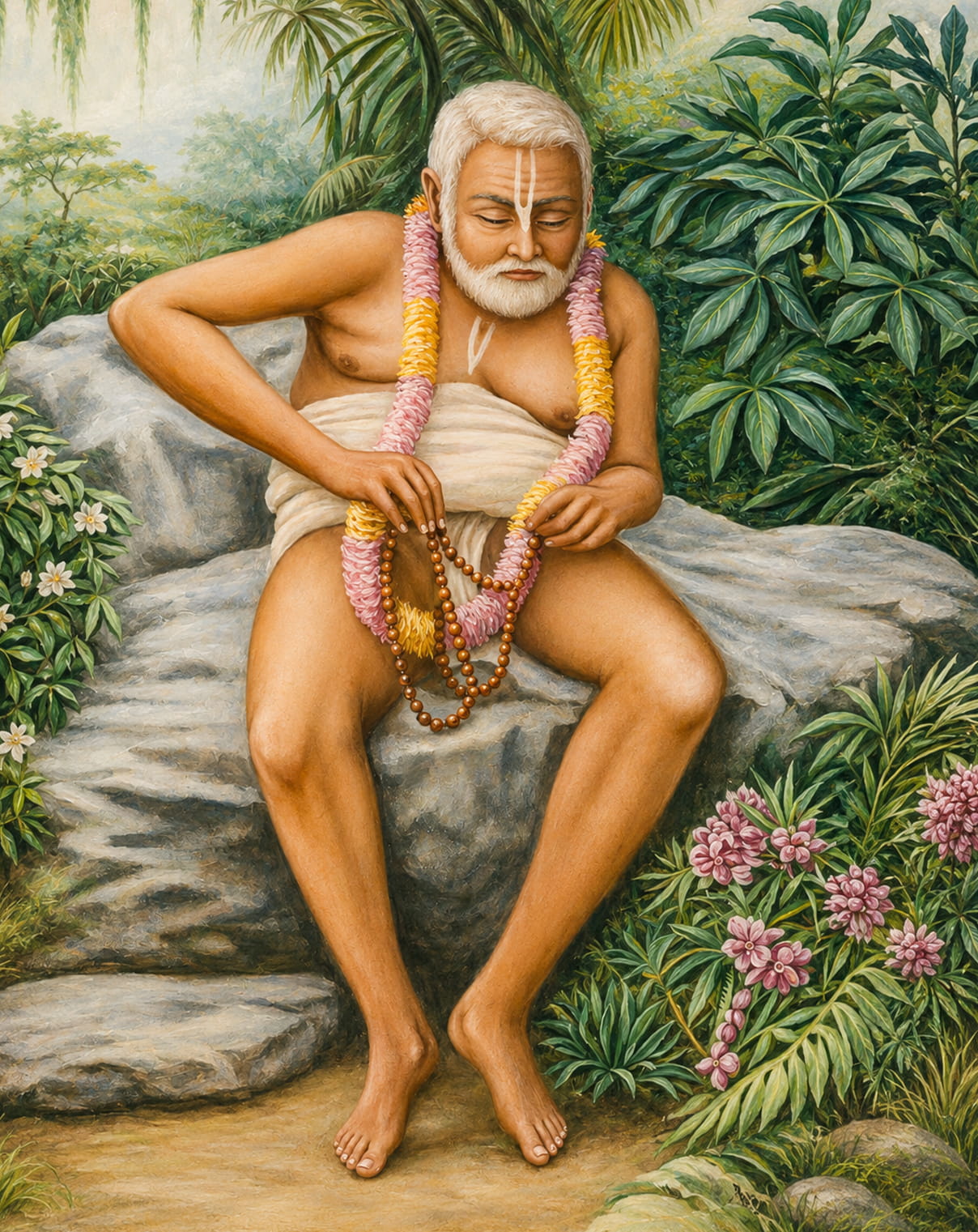
Disciples and successors
- Disciple
Srila Gaura Kishora Dasa Babaji Maharaja
Paramahamsa babaji and spiritual master of Bhaktisiddhanta Sarasvati Thakura
1830s – 17 November 1915 (Utthana Ekadashi)
Books
Datta-kaustubha
1874A Sanskrit work of 104 verses on Vaishnava philosophy.
Kalyana-kalpataru
1880A book of Bengali devotional songs.
Sajjana-toshani (magazine)
1881His Bengali spiritual journal.
Bhagavad-gita with Rasika-ranjana
1886Edition with Vishvanatha Chakravarti's commentary and his own.
Amrita-pravaha-bhashya
1886Commentary on Sri Chaitanya-charitamrita.
Bhagavad-gita with Vidvad-ranjana
1891Edition with Baladeva Vidyabhushana's Gita-bhushana and his own commentary.
Sriman Mahaprabhur Shiksha
1892The teachings of Lord Chaitanya in eleven chapters.
Tattva-viveka
1893A comparison of Vaishnava philosophy with other systems.
Vedarka-didhiti
1894Sanskrit commentary on Sri Ishopanishad.
Sri Gauranga-smarana-mangala
1896Sent to universities in the West; found at McGill University.
Brahma-samhita with Prakashini
1897Translation and commentary on the fifth chapter of Brahma-samhita.
Harinama-chintamani
1900Haridasa Thakura's teachings on the holy name.
Bhagavatarka-marichi-mala
1901Selected verses of Srimad-Bhagavatam arranged by topic.
Bhajana-rahasya
1902A supplement to Harinama-chintamani.
Sva-niyama-dvadashakam
1907Twelve verses of self-imposed vows; his last known work.
The acharyas
All acharyasMore acharyas
Continue along the disciplic succession.

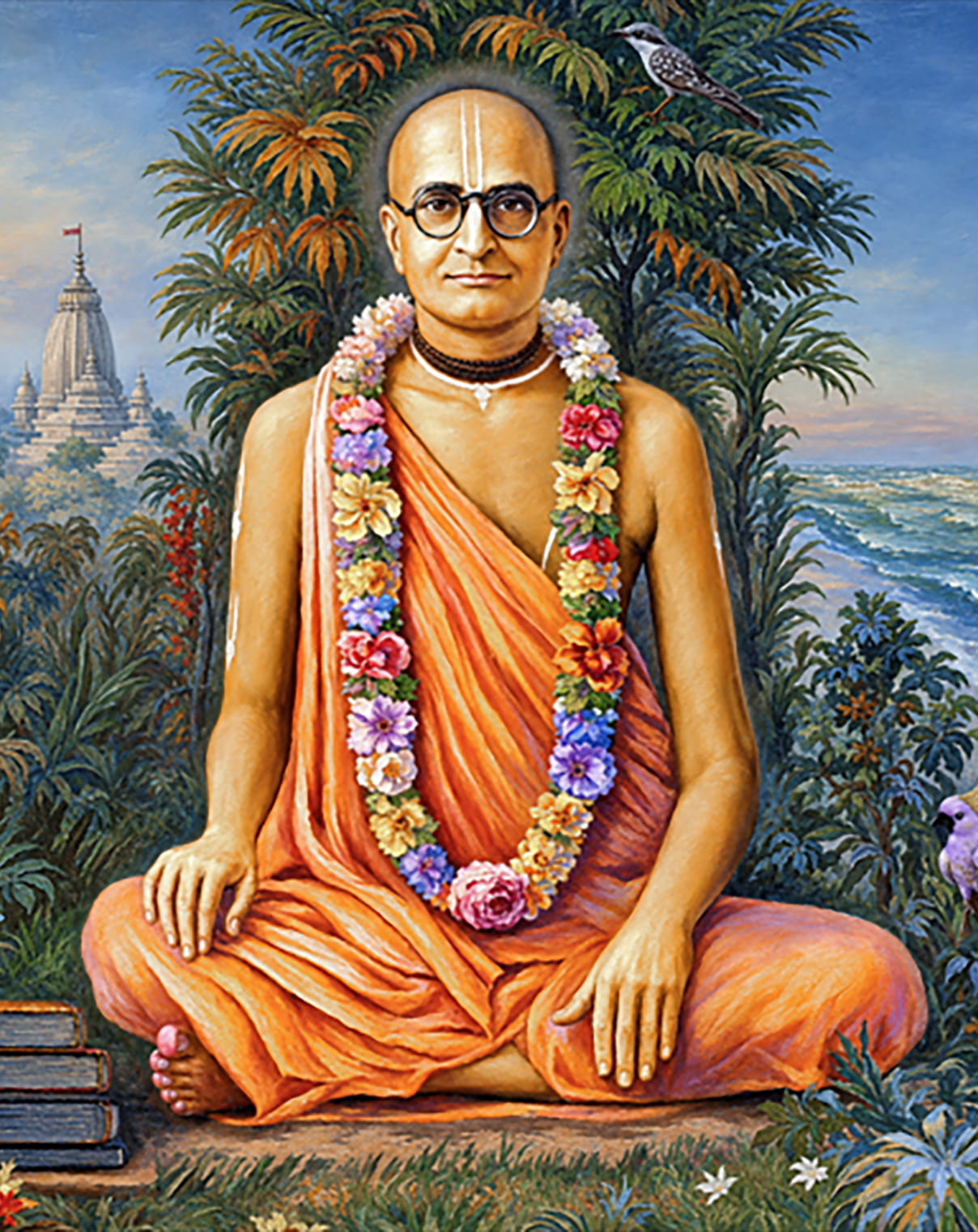
Srila Bhaktisiddhanta Sarasvati Thakura
Founder of the Gaudiya Math and spiritual master of Srila Prabhupada
6 February 1874 – 1 January 1937
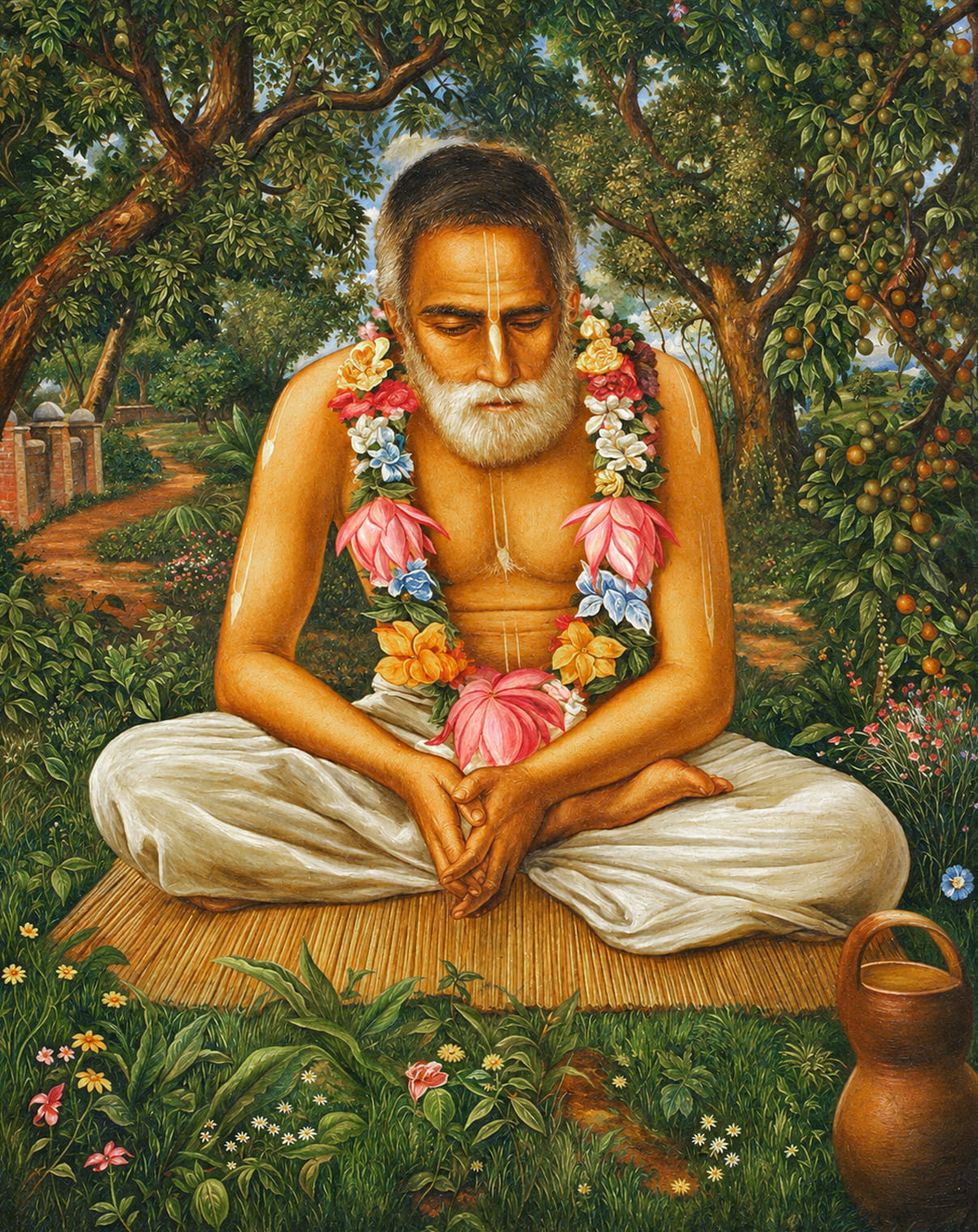
Srila Gaura Kishora Dasa Babaji Maharaja
Paramahamsa babaji and spiritual master of Bhaktisiddhanta Sarasvati Thakura
1830s – 17 November 1915 (Utthana Ekadashi)