
One of the Six Goswamis, famed for his sweet recitation of Srimad-Bhagavatam and for never hearing criticism of any Vaishnava.

Biography
Śrīla Raghunātha Bhaṭṭa Gosvāmī is in many ways the most hidden of the Six Gosvāmīs. He left no books. Yet Lord Caitanya considered his cooking, singing and recitation of Śrīmad-Bhāgavatam unparalleled. He is remembered for his sweet Bhāgavatam recitation, his service to Govindadeva, and his refusal ever to hear criticism of a Vaiṣṇava.
Son of Tapana Miśra
Raghunātha Bhaṭṭa was born in 1503, the son of Tapana Miśra. As a young teacher in East Bengal, Mahāprabhu had instructed Tapana Miśra in the chanting of the holy name and sent him to live in Vārāṇasī, promising to meet him there. Years later, as a sannyāsī, the Lord stayed in Vārāṇasī for two months, living with the physician Candraśekhara and taking His meals at Tapana Miśra's house.
Childhood Service
During that stay the boy Raghunātha washed the Lord's dishes and massaged His legs, begging to be given menial service. When Mahāprabhu left for Purī he was heartbroken, and as he grew up his memories of the Lord turned into an intense longing to serve Him again.
With Mahāprabhu in Purī
At about twenty, Raghunātha set out for Purī. On the way, Rāmadāsa Viśvāsa, a learned devotee of Lord Rāma, insisted on carrying his luggage and serving him. In Purī the Lord embraced Raghunātha and kept him for eight months. Raghunātha was an expert cook, and Mahāprabhu relished everything he prepared.
The Lord told him not to marry, to return home, serve his devotee parents and study the Bhāgavatam from a self-realised Vaiṣṇava. He gave him His own neck beads. Raghunātha served his parents for four years. After they passed away he returned to Purī for another eight months. Then Mahāprabhu sent him to Vṛndāvana to live under Rūpa and Sanātana, chant constantly and read the Bhāgavatam. The Lord gave him a fourteen-cubit tulasī garland worn by Lord Jagannātha and some betel, which Raghunātha worshipped and later wore around his neck in remembrance.
The Sweet Reciter of the Bhāgavatam
In Vṛndāvana Raghunātha recited Śrīmad-Bhāgavatam for Rūpa Gosvāmī. His voice was as sweet as a cuckoo's, and he sang each verse in three or four melodies. Often he was overcome with tears, trembling and a choked voice, and could not continue. He never spoke of worldly matters and would not listen to criticism of any Vaiṣṇava, seeing everyone as engaged in Kṛṣṇa's service.
Service to Govindadeva
Raghunātha took full shelter of Rūpa Gosvāmī's Deity, Śrī Govinda. He made ornaments for Him, including a flute and shark-shaped earrings, and inspired his disciple Rāja Man Singh to build the magnificent Govindajī temple.
Departure
Raghunātha Bhaṭṭa left this world around 1579 while performing bhajana at Rādhā-kuṇḍa. To protect his body from desecration, Jīva Gosvāmī had it cremated. His ashes rest at the Teen Gosvāmī Samādhi at Rādhā-kuṇḍa and in the 64 Samādhi area near the Govindajī temple. Bhakti-ratnākara says even Vyāsa would wish to hear his Bhāgavatam.
Sources
Compiled from the Bhakta Training Course chapters on the acharyas, with reference to Śrī Caitanya-caritāmṛta and Bhakti-ratnākara as cited there.
Teachings
See Every Vaiṣṇava as Kṛṣṇa's Servant
He would not hear about a Vaiṣṇava's faults, knowing that all are engaged in Kṛṣṇa's service. This is the vision of a mahā-bhāgavata.
Hear the Bhāgavatam from a Realised Soul
Mahāprabhu told him to study Śrīmad-Bhāgavatam from a self-realised Vaiṣṇava, not from professional reciters.
Avoid Worldly Talk
He never spoke or heard about material matters, only about Kṛṣṇa.
Serve Devotee Parents
On the Lord's order he served his Vaiṣṇava parents until their departure, then renounced home.
Celibacy Supports Advancement
The Lord told him not to marry, for he was already advanced and free from desire for sense enjoyment.
Chant and Read Constantly
Mahāprabhu's final instruction to him was to chant Hare Kṛṣṇa always and read the Bhāgavatam, and Kṛṣṇa would soon bestow His mercy.
Qualities
These qualities of Raghunātha Bhaṭṭa Gosvāmī are drawn from Caitanya-caritāmṛta and Bhakti-ratnākara.
1. Tolerance
He never criticised any Vaiṣṇava, even one at fault.
2. Sweetness
His voice and Bhāgavatam recitation melted every listener's heart.
3. Service Attitude
As a boy he begged for menial service and washed the Lord's dishes.
4. Expertise in Cooking and Kīrtana
Mahāprabhu relished his cooking and his melodies.
5. Absorption in the Bhāgavatam
He was so moved while reciting that he often could not go on.
6. Humility
He sought no fame and wrote no books about himself.
Sources
Compiled from the Bhakta Training Course chapters on the acharyas, with reference to Śrī Caitanya-caritāmṛta and Bhakti-ratnākara as cited there.
Timeline
- 1503
Appearance
Varanasi
Born to Tapana Mishra.
Serves Lord Chaitanya in Varanasi
Varanasi
As a boy, washed the Lord's dishes and massaged His legs during His two-month stay.
First stay in Jagannatha Puri
Jagannatha Puri
Lived with the Lord for eight months and cooked for Him.
Sent to Vrindavan
Jagannatha Puri
After serving his parents for four years, returned to Puri and was sent to live under Rupa and Sanatana.
- 1579
c. 1579
Disappearance
Radha-kunda
Departed while performing bhajana; his ashes rest at the Teen Goswami Samadhi.
The acharyas
All acharyasMore acharyas
Continue along the disciplic succession.

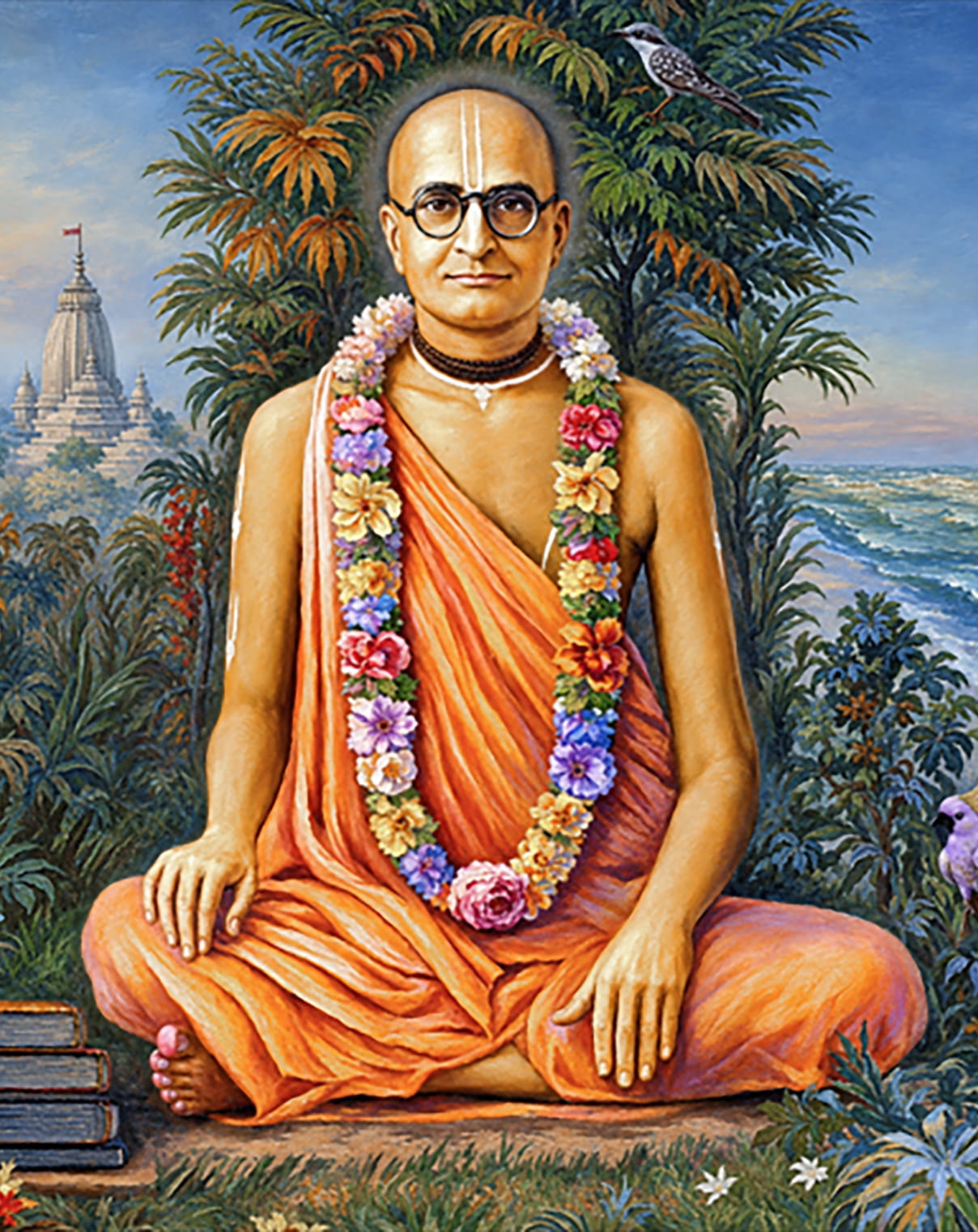
Srila Bhaktisiddhanta Sarasvati Thakura
Founder of the Gaudiya Math and spiritual master of Srila Prabhupada
6 February 1874 – 1 January 1937
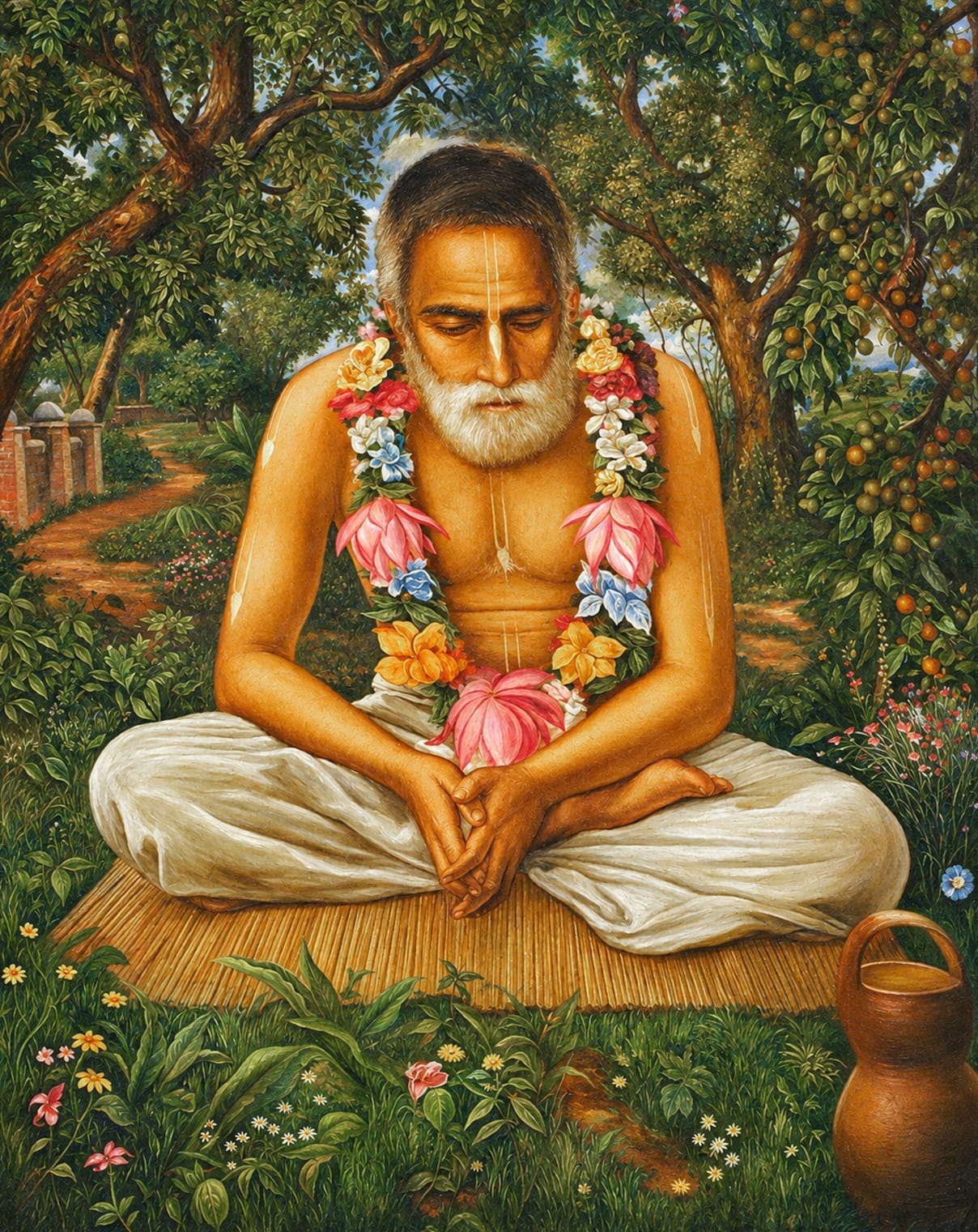
Srila Gaura Kishora Dasa Babaji Maharaja
Paramahamsa babaji and spiritual master of Bhaktisiddhanta Sarasvati Thakura
1830s – 17 November 1915 (Utthana Ekadashi)