
The great 17th-century acharya and commentator who protected the Goswamis' teachings, wrote Sri Gurvashtaka, and trained Baladeva Vidyabhushana.

Biography
Śrīla Viśvanātha Cakravartī Ṭhākura was the guardian and ācārya of the Gauḍīya sampradāya in the seventeenth century. Rising to prominence about sixty years after Jīva Gosvāmī's departure, he protected Lord Caitanya's teachings from distortion and wrote over forty works, including celebrated commentaries on Śrīmad-Bhāgavatam and Bhagavad-gītā and the Śrī Gurvaṣṭaka sung every morning in ISKCON temples. In Kṛṣṇa-līlā he is Vinoda-mañjarī.
Early Life
Viśvanātha was born in 1638 in a brāhmaṇa family in Nadia, Bengal, the youngest son of Rāma Nārāyaṇa Cakravartī. As a student he mastered Sanskrit grammar, philosophy, rhetoric and poetry, and could defeat anyone in debate. He took initiation from Rādhāramaṇa Cakravartī in the line of Narottama Dāsa Ṭhākura.
Renunciation
Married young, as was the custom, he had no interest in family life and left for Rādhā-kuṇḍa around 1655, living with Mukunda Dāsa in Kṛṣṇadāsa Kavirāja's old bhajana kuṭīra. When he returned home, his guru told him to spend one night in his wife's room. He obeyed, but spent the whole night chanting. His guru was delighted by his self-control.
His guru then had him copy Śrīmad-Bhāgavatam by hand. As he wrote, clouds shaded him from the sun, and once rain fell all around without touching him or the manuscript.
At Rādhā-kuṇḍa
Sent back to Vraja, Viśvanātha built his kuṭīra next to Raghunātha Dāsa Gosvāmī's at Rādhā-kuṇḍa and wrote most of his books there. A brahmacārī brought him the Deity Śrī Gokulānanda, who had asked in a dream to be worshipped by him. He also took over the worship of the Govardhana-śilā given by Mahāprabhu to Raghunātha Dāsa Gosvāmī. Both are now in the Rādhā-Gokulānanda temple in Vṛndāvana.
Defender of Parakīya-rasa
After Jīva Gosvāmī's departure, some of his followers insisted that Rādhā and Kṛṣṇa were married (svakīya), denying the parakīya mood of Vraja. Others twisted rāgānuga-bhakti to reject regulated practice. Viśvanātha defeated their arguments one by one.
Some of his opponents hid in the forest near Rādhā-kuṇḍa to attack him. There they met a lovely young girl picking flowers, who said she was Rādhārāṇī's maidservant gathering flowers for Rādhā's garland for her beloved. She vanished, and they saw Viśvanātha in her place. Understanding that they had seen his eternal form, they begged forgiveness. He forgave them and asked why, if Rādhā and Kṛṣṇa were married, They met secretly at Saṅketa at night. The panditas accepted him as their śikṣā-guru.
Rādhārāṇī Resolves His Doubt
While writing Mantrārtha-dīpikā on the kāma-gāyatrī, he found that Kṛṣṇadāsa Kavirāja counted twenty-four and a half syllables, against the twenty-five of other authorities. Horrified at doubting a pure devotee, he resolved to fast until death. At dawn Śrīmatī Rādhārāṇī appeared in a dream, confirmed Kṛṣṇadāsa's words and directed him to the book Varṇāgama-bhāsvat, which explains the half syllable.
Writings, Disciple and Departure
His works include the Sārārtha-darśinī commentary on Śrīmad-Bhāgavatam, which Śrīla Prabhupāda consulted, a Bhagavad-gītā commentary, Mādhurya-kādambinī, Vraja-rīti-cintāmaṇi, Kṛṣṇa-bhāvanāmṛta, Camatkāra-candrikā, a Sanskrit commentary on Prema-bhakti-candrikā, and the Śrī Gurvaṣṭaka. His disciple Baladeva Vidyābhūṣaṇa became the next ācārya. Viśvanātha left this world in 1708; his samādhi is in the garden of the Rādhā-Gokulānanda temple.
Sources
Compiled from the Bhakta Training Course chapters on the acharyas, with reference to Śrī Caitanya-caritāmṛta and Bhakti-ratnākara as cited there.
Teachings
Worship the Spiritual Master
In Śrī Gurvaṣṭaka he teaches that the guru, as the Lord's dearest servant, is to be honoured as the Lord Himself, and that by his mercy one receives Kṛṣṇa's mercy.
The Stages of Devotion
Mādhurya-kādambinī maps the soul's journey from faith through practice, steadiness, taste and attachment to pure love.
Rādhā and Kṛṣṇa's Love Is Parakīya
The highest love in Vraja is the secret paramour love of Rādhā and Kṛṣṇa, which surpasses the married love of Vaikuṇṭha.
Rāgānuga Does Not Reject Vidhi
Spontaneous devotion grows within regulated practice. Hearing and chanting are never to be neglected.
Never Doubt a Pure Devotee
His willingness to die rather than doubt Kṛṣṇadāsa Kavirāja shows the faith a disciple must have in the ācāryas.
Qualities
These qualities of Viśvanātha Cakravartī Ṭhākura are drawn from the history of the Gauḍīya ācāryas.
1. Scholarship
He wrote over forty works and the most celebrated commentaries of his age.
2. Sense Control
He spent his one night with his young wife chanting the holy name.
3. Courage
He stood firm against the deviant scholars of his time.
4. Forgiveness
He forgave those who came to harm him.
5. Faith in the Ācāryas
He chose death over doubting Kṛṣṇadāsa Kavirāja.
6. Rasika Devotion
His writings reveal the sweetest moods of Vraja.
Sources
Compiled from the Bhakta Training Course chapters on the acharyas, with reference to Śrī Caitanya-caritāmṛta and Bhakti-ratnākara as cited there.
Timeline
- 1638
Appearance
Nadia, Bengal
Born to Rama Narayana Chakravarti.
- 1655
c. 1655
First stay at Radha-kunda
Radha-kunda
Lived with Mukunda Dasa in Krishnadasa Kaviraja's old bhajana kutir.
Copies Srimad-Bhagavatam
Nadia, Bengal
Clouds shaded him and rain did not fall on him as he wrote.
Receives Sri Gokulananda
Radha-kunda
Accepted the Deity after the Lord instructed him in a dream.
Defends parakiya-rasa
Radha-kunda
Defeated the proponents of svakiya-vada, who became his followers.
- 1708
Disappearance
Vrindavan
His samadhi is in the garden of the Radha-Gokulananda temple.
Books
Sarartha-darshini
Commentary on Srimad-Bhagavatam, consulted by Srila Prabhupada.
Commentary on Bhagavad-gita
Commentary on the Bhagavad-gita.
Madhurya-kadambini
Describes the stages of devotional advancement from faith to love of God.
Sri Gurvashtaka
Eight prayers to the spiritual master, sung daily at mangala-arati.
Vraja-riti-chintamani
On the customs and holy places of Vraja.
Sri Krishna-bhavanamrita
A poem on the daily pastimes of Radha and Krishna.
Sankalpa-kalpadruma
Prayers for service in the daily pastimes.
Mantrartha-dipika
Explains the confidential meaning of the kama-gayatri mantra.
Chamatkara-chandrika
Four stories of Radha and Krishna's pastimes.
Commentary on Prema-bhakti-chandrika
Sanskrit commentary on Narottama Dasa Thakura's poem.
The acharyas
All acharyasMore acharyas
Continue along the disciplic succession.

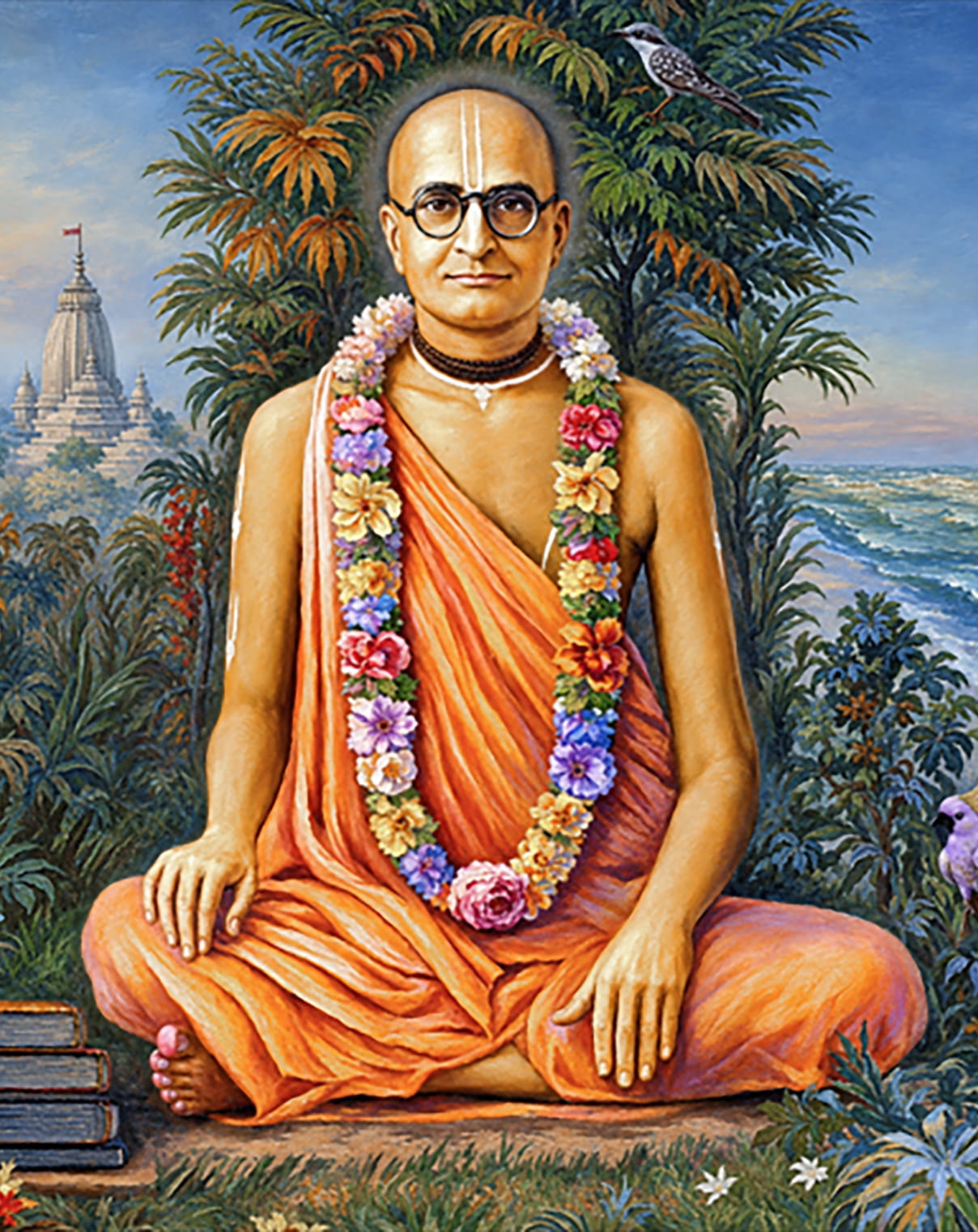
Srila Bhaktisiddhanta Sarasvati Thakura
Founder of the Gaudiya Math and spiritual master of Srila Prabhupada
6 February 1874 – 1 January 1937
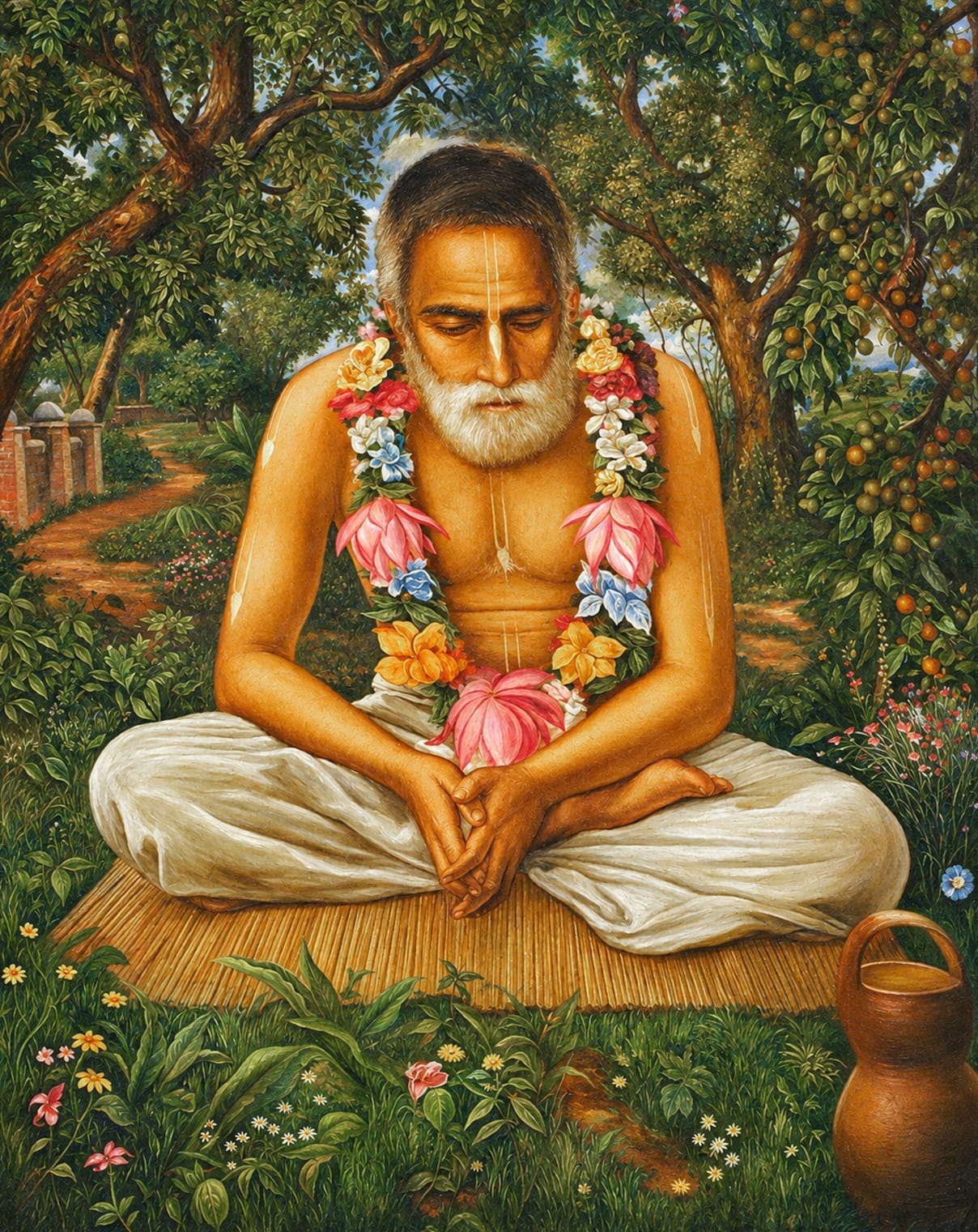
Srila Gaura Kishora Dasa Babaji Maharaja
Paramahamsa babaji and spiritual master of Bhaktisiddhanta Sarasvati Thakura
1830s – 17 November 1915 (Utthana Ekadashi)