In short
Gaya is an ancient pilgrimage city in Bihar, famous for the Vishnupad temple, which holds the footprint of Lord Vishnu, and for offering pinda to ancestors. Lord Chaitanya Mahaprabhu received initiation from Ishvara Puri at Gaya, and nearby Bodh Gaya is where the Buddha attained enlightenment.
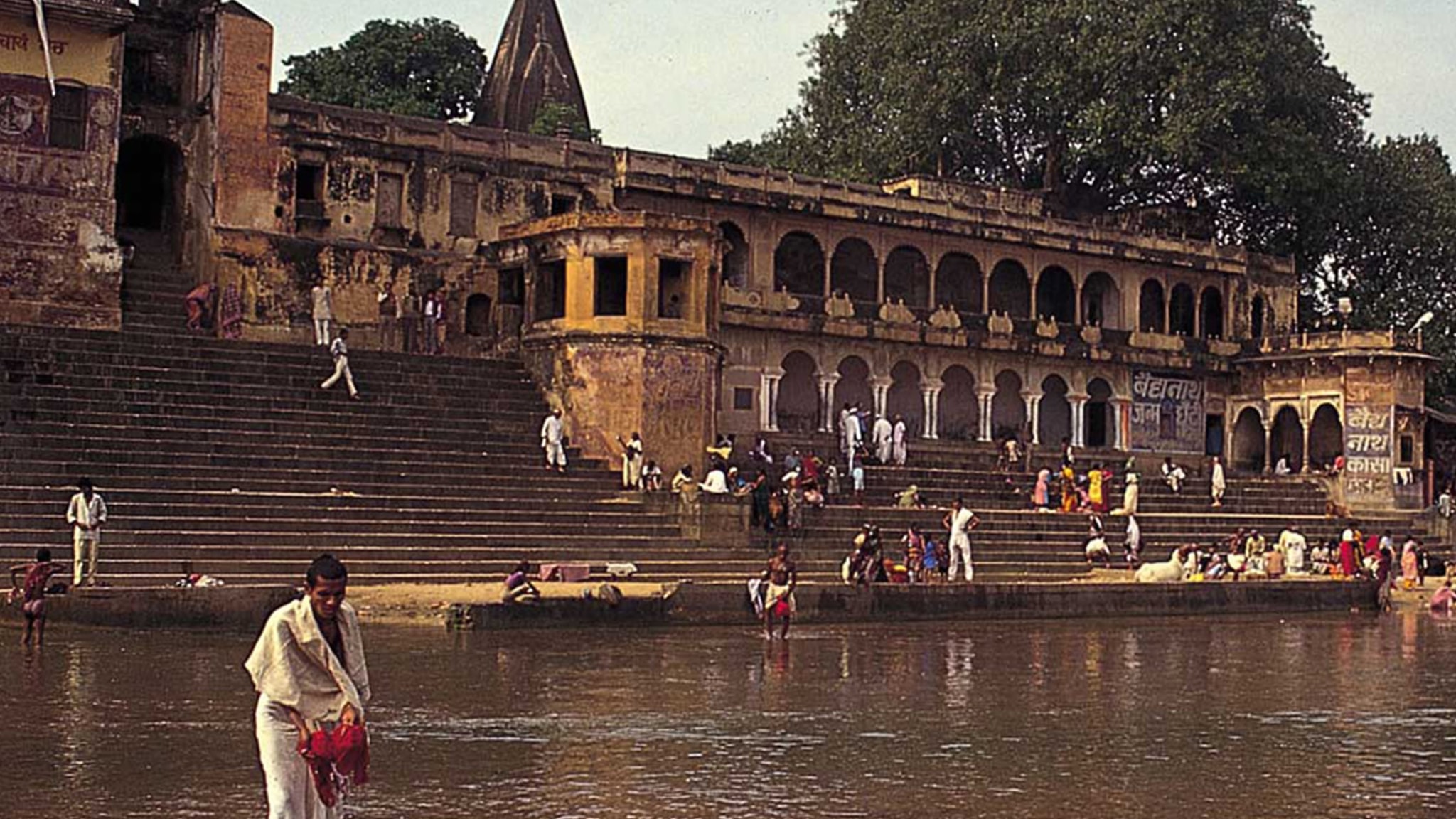
Gaya is of historical significance and is one of the major pilgrimage sites in the state of Bihar. Gaya is 100 kilometres south of Patna, the capital city of Bihar. The city is surrounded on three sides by small, rocky hills (Mangla-Gauri, Shringa-Sthan, Ram-Shila, and Brahmayoni), with the Phalgu River on its fourth (eastern) side.
Gaya is mentioned in the great epics, the Ramayana and the Mahabharata. It is the place where Rama, with Sita and Lakshmana, came to offer pind-daan for their father, Dasharath, and continues to be a major Hindu pilgrimage site for the pind-daan ritual.
In Garuda Purana, while describing the holy place, Gaya, this story is narrated: There was a great demon named Gaya. Once, he performed severe austerities that began to scorch all living beings throughout the fourteen worlds. Being burnt by the demon’s austerities, the demigods approached Lord Vishnu.
Lord Vishnu assured the demigods that He would stop the demon’s austerities. Once day thereafter, Lord Vishnu picked some lotuses and presented them to Gaya for the worship of Lord Shiva. Being deluded by maya, the demon didn’t perform the worship but instead, lay down and slept. Being given this opportunity, Lord Vishnu killed the demon with His club. Ever since that time, Lord Vishnu has remained at that place (Gaya) with His club in His hand.
गया का ऐतिहासिक महत्व है और यह बिहार राज्य के प्रमुख तीर्थ स्थलों में से एक है। गया बिहार की राजधानी पटना से 100 किलोमीटर दक्षिण में है। शहर तीन तरफ से छोटी, चट्टानी पहाड़ियों (मंगला-गौरी, श्रृंग-स्थान, राम-शिला और ब्रह्मयोनि) से घिरा हुआ है, इसके चौथे (पूर्वी) किनारे पर फल्गु नदी है।
गया का उल्लेख महान महाकाव्यों, रामायण और महाभारत में किया गया है। यह वह स्थान है जहां राम, सीता और लक्ष्मण के साथ, अपने पिता दशरथ के लिए पिंडदान करने आए थे, और यह पिंडदान अनुष्ठान के लिए एक प्रमुख हिंदू तीर्थ स्थल बना हुआ है।
गरुड़ पुराण में पवित्र तीर्थ गया का वर्णन करते हुए यह कथा आती है: गया नाम का एक महान राक्षस था। एक बार, उन्होंने कठोर तपस्या की जिससे चौदहों लोकों के सभी जीवित प्राणी झुलसने लगे। राक्षस की तपस्या से जलकर देवता भगवान विष्णु के पास पहुंचे।
भगवान विष्णु ने देवताओं को आश्वासन दिया कि वह राक्षस की तपस्या बंद कर देंगे। उसके बाद एक दिन, भगवान विष्णु ने कुछ कमल तोड़े और उन्हें भगवान शिव की पूजा के लिए गया में प्रस्तुत किया। माया से मोहित होकर राक्षस ने पूजा नहीं की, बल्कि लेट गया और सो गया। यह अवसर पाकर भगवान विष्णु ने अपनी गदा से राक्षस को मार डाला। उस समय से, भगवान विष्णु अपनी गदा हाथ में लेकर उसी स्थान (गया) पर ही विराजमान हैं।
Support this seva
Share the Lord’s mercy with those in need. Through Annadana Seva, Hare Krishna Mandir serves sanctified prasadam to the hungry every day.
Frequently asked questions
Why is Gaya famous?
For the Vishnupad temple with Lord Vishnu’s footprint, and for shraddha and pinda offerings that are believed to liberate one’s ancestors.
What is the connection between Gaya and Lord Chaitanya?
Lord Chaitanya went to Gaya to offer pinda for His father. There He met Ishvara Puri, accepted initiation from him, and returned to Navadvipa absorbed in love of Krishna.
What is the story of Gayasura?
Gayasura was a powerful asura whose body became so pure through austerity that Lord Vishnu placed His foot on him, sanctifying the place, which then took his name.
Is Bodh Gaya the same as Gaya?
No. Bodh Gaya is a separate town about 15 km away, where the Buddha attained enlightenment.
Comments
Be the first to share your thoughts.