In short
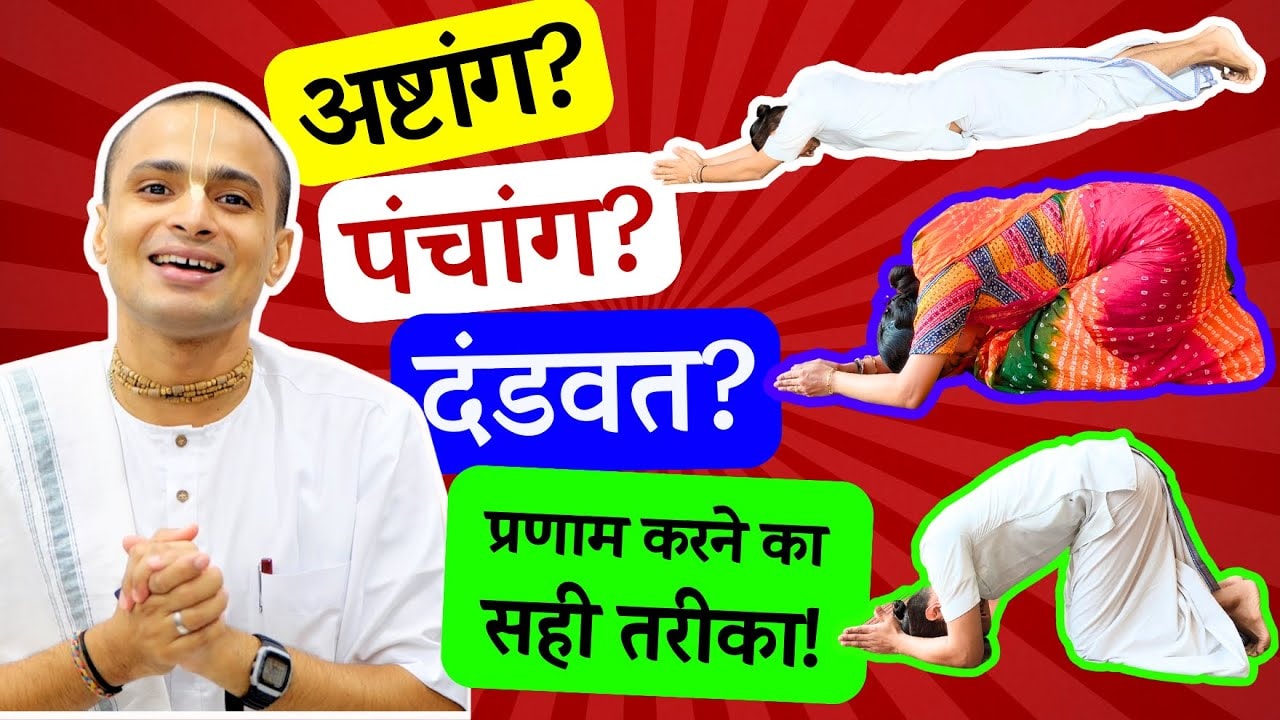
A dandavat pranam means falling flat on the ground “like a stick” (danda) before the Deity, the spiritual master or a Vaishnava. Men usually offer the ashtanga (eight-limbed) pranam, touching the ground with feet, knees, chest, hands, head and forehead. Women usually offer the panchanga (five-limbed) pranam, kneeling and touching the forehead to the ground.
Understanding Different Types of Pranam and Their Significance
In today's video, we will delve into the ways Lord Shri Krishna and our spiritual teacher, Srila Prabhupada, are offered salutations. We will explore the meaning and significance of various forms of pranam, such as Ashtanga Pranam, Sashtanga Pranam, and Dandvat Pranam.
Dandvat Pranam, also known as Ashtanga Pranam, involves bowing down completely, touching the ground with eight parts of the body: forehead, chest, both hands, both knees, and both feet. It signifies complete surrender and reverence towards God, the guru, or any other revered figure.
When ladies offer pranam, they do it slightly differently from gentlemen. While gentlemen perform Ashtanga Pranam, ladies typically offer Panchang Pranam, where they touch the ground with five parts of their body both knees, both hands, and the head.
The significance of these forms of pranam lies in demonstrating humility, devotion, and respect towards the divine or revered personalities. It is essential to recite prayers or mantras while offering salutations, as it enhances the spiritual connection and reinforces one's reverence.
The question often arises: why do we not offer pranam directly but bend down instead? The answer lies in the presence of the divine or revered figures, where devotees are granted darshan (sight) of their revered deity. Since they remain standing to facilitate darshan for all devotees, it is more appropriate for devotees to perform a side-bend pranam rather than directly bowing down.
Overall, offering pranam in its various forms is a deeply spiritual practice that symbolizes surrender, reverence, and devotion towards the divine or respected figures in Hindu tradition.
Support this seva
Share the Lord’s mercy with those in need. Through Annadana Seva, Hare Krishna Mandir serves sanctified prasadam to the hungry every day.
Frequently asked questions
What does “dandavat” mean?
“Like a stick.” The body falls straight on the ground, showing full surrender.
What is the difference between ashtanga and panchanga pranam?
Ashtanga pranam uses eight parts of the body, lying fully on the ground; panchanga pranam uses five, kneeling with the forehead, hands and knees touching the ground.
When should one offer dandavat pranam?
On entering the temple, before the Deities, to the spiritual master and to senior Vaishnavas.
Which mantra is said while offering pranam?
Devotees usually recite the pranama mantra of their spiritual master and of Srila Prabhupada, followed by the Pancha-tattva mantra.


Comments
Be the first to share your thoughts.