In short
Purushottam Maas (Adhika Maas) is the extra lunar month added about every three years to align the lunar and solar calendars. Once considered inauspicious, it was given Lord Krishna’s own name, Purushottama, and became the most sacred of all months for devotion. Devotees increase chanting, reading and worship during it rather than starting worldly undertakings.
Introduction: A Rare Spiritual Window
Have you hit a spiritual plateau? Do your daily spiritual practices feel mechanical? Out of boundless compassion for the conditioned souls trapped in this material world—which Lord Sri Krishna explicitly describes in the Bhagavad Gita (8.15) as dukhālayam aśāśvatam (a temporary place full of miseries)—the Supreme Lord opens a extraordinary, transcendental gateway of mercy once every three years. This sacred period is known as Purushottam Masa, or Adhika Masa.
As calculated per the traditional lunar calendar, an extra month is added approximately every 32 months, 16 days, and 4 hours to align the moon's phases with the solar cycle. Far from being an ordinary astronomical anomaly, this month is packed with a spiritual potency that exceeds all other months of the year.
The Extraordinary History: From Malamasa to the Month of Lord Krishna
In the Brihan-naradiya Purana, the wonderful history of this period is revealed. Originally, this extra month was known as Malamasa—a contaminated, unwanted, and "untouchable" month. Because there is no solar transit (Sankranti) during this timeframe, no demigods claimed it, and it was considered completely inauspicious for regular ritualistic material duties.
Deeply sorrowful, the personified deity of the month wept before Lord Narayana, pleading for shelter. Out of profound kindness, Lord Narayana led her to the highest spiritual realm of Goloka Vrindavana, where the supreme controller resides in His original, sweetest aspect alongside His eternal consort, Shrimati Radharani.
Upon hearing her surrender, Lord Sri Krishna delivered a monumental blessing. He declared: "Just as I am celebrated in this world and in the Vedas as Purushottam (the Supreme Personality who transcends both the fallible and infallible), I grant My own name, qualities, and potency to this month. From this day forward, it shall be known as Purushottam Masa."
Why Purushottam Masa Surpasses Kartika Masa
In the hierarchy of Vedic timeframes, specific months yield distinct spiritual fruits:
-
Magha Masa is highly meritorious for charity and penance.
-
Damodara Masa (Kartika Month), occurring annually, awards immense devotional credit (bhakti-sukriti).
-
Purushottam Month, however, is uniquely more auspicious and spiritually potent than even Kartika Masa.
Most months are utilized by people for Sakama Bhakti—worshiping the Lord or demigods to obtain a good job, a beautiful home, or material family happiness. However, performing materialistic rituals in this world is like making comfort arrangements inside a prison cell.
Purushottam Masa is strictly designed for Nishkama Bhakti—pure devotional service completely devoid of material expectations. The unique blessing of this month is that it completely roots out the material mentality to enjoy separately from Krishna, purifying the heart at a cellular level.
Destroying Past Spiritual Offenses (Aparadhas)
The ultimate benefit of observing the Purushottam Vrata is the total eradication of past scriptural or devotional offenses (Nama-aparadha and Vaishnava-aparadha).
The Puranas recount that Durvasa Muni once committed a severe offense against the exalted devotee Ambarisha Maharaj, causing the terrifying Sudarshana Chakra of Lord Vishnu to chase him across the universes for an entire year. Though the chakra followed him everywhere, it never burned or incinerated him. Durvasa Muni himself later revealed that he was protected from total destruction only because he had strictly observed the Purushottam Month Vrata in his past.
Conversely, the Brihan-naradiya Purana warns against neglecting this month. In her previous birth as the daughter of Medha Rishi (Medha Kumari), Draupadi skeptically questioned the glories of Adhika Masa and neglected its observance. Consequently, despite being an unalloyed devotee and having five of the most powerful husbands on earth, she had to endure severe public humiliation (apamana) in the assembly of the Kauravas. This dynamic emphasizes why ISKCON acharyas urge practitioners never to treat this rare window with laziness or apathy.
Step-by-Step Procedures: How to Observe the Purushottam Vrata
To unlock the infinite blessings of Lord Purushottam, devotees should diligently execute the following scriptural practices for these 30 days:
1. Daily Offering of the Ghee Lamp (Deepadan)
Every single day, offer a pure cow-ghee lamp to Radha-Krishna. While waving the lamp, chant the potent scriptural prayer from the Puranas to connect with His beautiful form:
Navaghana-shyamalāya Dvibhujāya Murali-dharāya
Pītambaradharāya Saha-radhāya Purushottamāya Namah
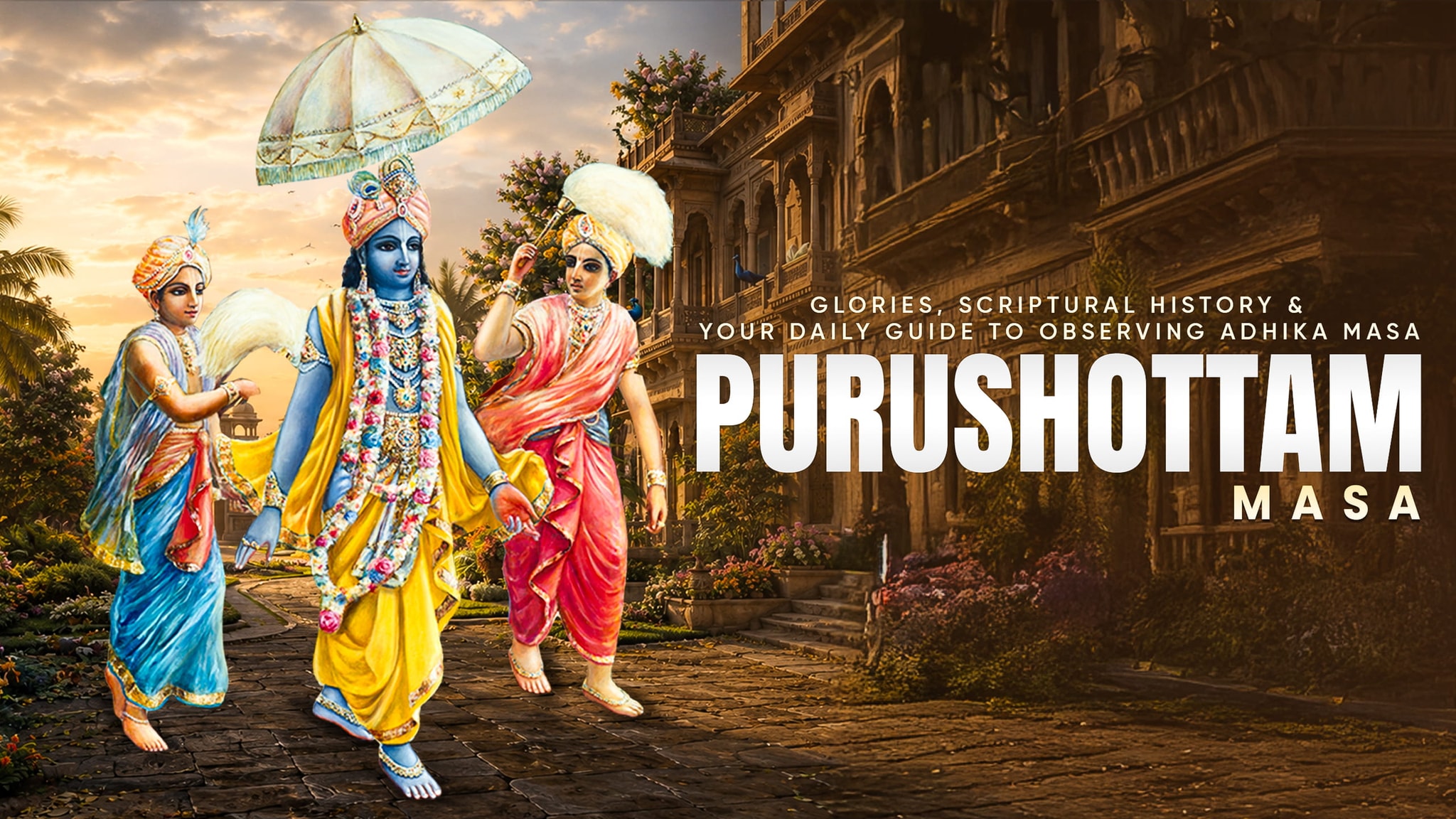
This prayer reminds us to meditate on the original two-handed form of Krishna, whose complexion matches a freshly formed dark rain cloud (Navaghana-shyama), holding His divine flute (Murali-dhara), dressed in yellow garments (Pitambara), standing eternally with Shrimati Radharani.
If you are traveling or lack physical resources, close your eyes and sincerely offer this ghee lamp within your mind—Krishna accepts the genuine endeavor of the heart!
2. Read and Hear Shrimad Bhagavatam (Bhagavat Shravana)
Take a strict vow (Sankalpa) to read at least one verse, translation, and purport of the Shrimad Bhagavatam daily. Reciting Chapter 15 of the Bhagavad Gita (Purushottam Yoga) is also highly recommended and takes less than five minutes.
3. Rise Early for Brahma Muhurta & Increase Japa
Commit to waking up during the auspicious Brahma Muhurta hours to attend Mangala Arati. Utilize this quiet time to increase your focus and the number of rounds chanting the Hare Krishna Maha-mantra:
Hare Krsna, Hare Krsna, Krsna Krsna, Hare Hare
Hare Rāma, Hare Rāma, Rāma Rāma, Hare Hare
4. Spiritual Cleaning and Sacred Tilak
Maintain absolute physical and internal cleanliness. Upon taking your bath, immediately apply the sacred Gopi Chandana Vaishnava Tilak to decorate your body as a temple of the Lord.
The Essential Role of Devotional Charity (Dana)
Lord Sri Krishna places an absolute condition on charity performed during Purushottam Masa: The donation must be given to a qualified Vishnu-Bhakta (Vaishnava) or used directly in the active service of the Supreme Lord. Giving charity to unqualified places in Kali-yuga carries heavy material reactions. However, donating to push forward the mission of ISKCON ensures your hard-earned resources are deployed strictly for pure spiritual activities—feeding pilgrims, distributing Vedic literature, and building temples.
Transform Your Spiritual Fortune Today
Do not let this rare month pass by through spiritual compromise or hoarding (karpanya). Practice large-hearted benevolence by contributing to sacred causes:
-
Support Temple Services: Ensure the continuous, grand worship of Sri Sri Radha-Krishna. Click here to Sponsor Deities and Temple Seva.
-
Perform Sacred Annadan (Food Distribution): Feed visiting pilgrims, sadhus, and the less fortunate with pure Krishna Prasadam. Click here to Support Our Food Distribution Initiative.
-
Donate Transcendental Knowledge: Help print and distribute copies of Bhagavad Gita As It Is and Shrimad Bhagavatam. Click here to Sponsor Shrimad Bhagavatam Distribution.
At the beginning of the month, take your solemn vow (Sankalpa) by holding Tulsi leaves in your hand before the Deities, praying: "O Lord Purushottam, on Your supreme order, I am executing this Vrata for Your pleasure. Please grant me the spiritual strength, intelligence, and resources to complete it successfully." At the conclusion of the month, offer your actions back to Him in complete surrender (Samarpana), begging forgiveness for any shortcomings.
May Lord Sri Purushottam and Shrimati Radharani shower their ultimate blessings upon your family this Adhika Masa!
Support this seva
Share the Lord’s mercy with those in need. Through Annadana Seva, Hare Krishna Mandir serves sanctified prasadam to the hungry every day.
Frequently asked questions
How often does Purushottam Maas come?
About once every 32 to 33 months, whenever an extra lunar month is needed to keep the lunar calendar in line with the solar year.
Why is it called Purushottam Maas?
Lord Krishna gave the month His own name, Purushottama (the Supreme Person), and promised that devotion performed in it brings great benefit.
What should be done in Purushottam Maas?
Chant more rounds, read the Bhagavad Gita and Srimad-Bhagavatam, offer lamps, visit the temple and serve devotees.
What should be avoided?
Traditionally, new material undertakings such as weddings and housewarmings are avoided, so the month can be used for spiritual practice.

Comments
Be the first to share your thoughts.