

Receive Maha Prasadam
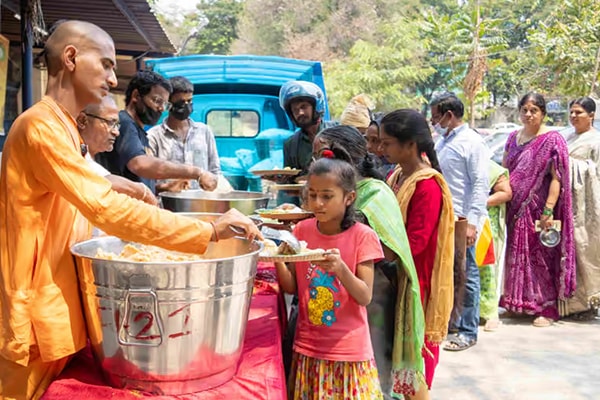
Prasadam from our temple for donations.

Choose what you would like to offer and add it to your cart. You can give to more than one seva, then pay once on a secure page.




Benefits and acknowledgements available with eligible offerings.
Prasadam from our temple for donations.

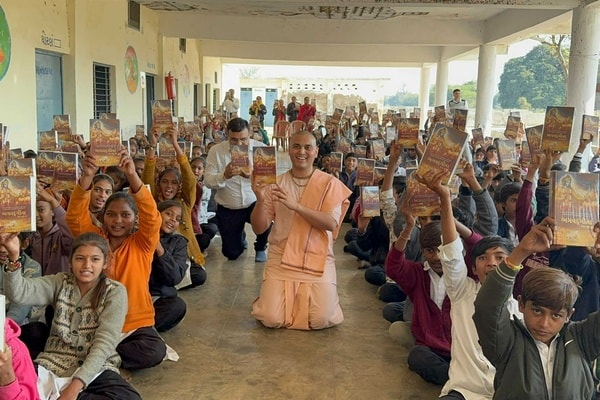
Enrich your spiritual life with selected books full of timeless wisdom and bhakti.

Donations are eligible for 80G tax exemption.
Only for Indian donors giving in rupees to an 80G-eligible seva, with your PAN and postal address.

Special prayers and Aarti will be performed.

A beautiful, personalized digital certificate recognizing your generous support.
Words from devotees who have offered seva at the mandir.
We accept donations through multiple secure channels which includes UPI, bank transfers, and cheques.
Transfer by NEFT, RTGS or IMPS to the account below.
Scan the code, or pay to the UPI ID below from any UPI app.

After paying from your own bank or UPI app, please send us the transaction reference with your name and address, so we can record the offering and issue your receipt. If the gift is eligible for 80G, we will ask for your PAN.
In the devotional tradition, seva is not an extra beside worship but one of the ways worship is lived. Offering time, work or a gift to the Lord turns an ordinary day into an offering. Here are a few verses from the Bhagavad-gita and the Srimad-Bhagavatam on giving and service, each with its meaning in plain words.
यज्ञार्थात्कर्मणोऽन्यत्र लोकोऽयं कर्मबन्धनः ।
तदर्थं कर्म कौन्तेय मुक्तसङ्गः समाचरyajñārthāt karmaṇo ’nyatra loko ’yaṁ karma-bandhanaḥ tad-arthaṁ karma kaunteya mukta-saṅgaḥ samācara
Only actions performed as an offering to Vishnu leave us unbound; all other work ties us to this world. So act for His sake, free from attachment.
पत्रं पुष्पं फलं तोयं यो मे भक्त्या प्रयच्छति ।
तदहं भक्त्युपहृतमश्नामि प्रयतात्मन:patraṁ puṣpaṁ phalaṁ toyaṁ yo me bhaktyā prayacchati tad ahaṁ bhakty-upahṛtam aśnāmi prayatātmanaḥ
When a pure-hearted person lovingly offers Krishna a leaf, a flower, a fruit or a little water, He accepts and receives it.
यत्करोषि यदश्नासि यज्जुहोषि ददासि यत् ।
यत्तपस्यसि कौन्तेय तत्कुरुष्व मदर्पणम्yat karoṣi yad aśnāsi yaj juhoṣi dadāsi yat yat tapasyasi kaunteya tat kuruṣva mad-arpaṇam
Krishna invites us to turn every part of life into an offering to Him: our daily work, our meals, our worship, our gifts and our self-discipline.
अभ्यासेऽप्यसमर्थोऽसि मत्कर्मपरमो भव ।
मदर्थमपि कर्माणि कुर्वन्सिद्धिमवाप्स्यसिabhyāse ’py asamartho ’si mat-karma-paramo bhava mad-artham api karmāṇi kurvan siddhim avāpsyasi
If you cannot manage the disciplined practices of devotion, simply make working for Krishna your highest aim; acting for His sake will bring you to perfection.
दातव्यमिति यद्दानं दीयतेऽनुपकारिणे ।
देशे काले च पात्रे च तद्दानं सात्त्विकं स्मृतम्dātavyam iti yad dānaṁ dīyate ’nupakāriṇe deśe kāle ca pātre ca tad dānaṁ sāttvikaṁ smṛtam
A gift made because giving is right, to someone who can give nothing back, at a fitting time and place and to a worthy recipient, is called pure charity.
यज्ञदानतप:कर्म न त्याज्यं कार्यमेव तत् ।
यज्ञो दानं तपश्चैव पावनानि मनीषिणाम्yajña-dāna-tapaḥ-karma na tyājyaṁ kāryam eva tat yajño dānaṁ tapaś caiva pāvanāni manīṣiṇām
Worship, giving and self-discipline should never be abandoned but always practised, because these three purify even the wise.
यत: प्रवृत्तिर्भूतानां येन सर्वमिदं ततम् ।
स्वकर्मणा तमभ्यर्च्य सिद्धिं विन्दति मानव:yataḥ pravṛttir bhūtānāṁ yena sarvam idaṁ tatam sva-karmaṇā tam abhyarcya siddhiṁ vindati mānavaḥ
Through their own work, people attain perfection by worshipping the Lord, who is the origin of all beings and who fills everything.
यथा तरोर्मूलनिषेचनेन
तृप्यन्ति तत्स्कन्धभुजोपशाखा: ।
प्राणोपहाराच्च यथेन्द्रियाणां
तथैव सर्वार्हणमच्युतेज्याyathā taror mūla-niṣecanena tṛpyanti tat-skandha-bhujopaśākhāḥ prāṇopahārāc ca yathendriyāṇāṁ tathaiva sarvārhaṇam acyutejyā
Watering a tree’s root nourishes its trunk, branches and twigs, and feeding the life-breath strengthens the senses; likewise, worshipping Achyuta (Krishna) honours everyone at once.
Sanskrit and transliteration are taken from the Vedabase library. The meanings are short summaries in plain words, not word-for-word translations.
Receipts, 80G, payments and what happens after you give. If you cannot find your answer, we are one call away.
Indian donors giving in Indian rupees to sevas marked “80G eligible” can get one. Tick the 80G box at checkout and enter your PAN and postal address; the certificate is issued against your PAN and follows your receipt. Every seva in the donation has to be 80G eligible. A gift in another currency, or from a foreign citizen, is a foreign contribution under FCRA and never carries 80G.
Where a seva allows it, pick “Other amount” and type your own. The minimum, and the maximum if there is one, is shown beside the field.
Yes, unless you ask us not to. An online donation is listed on the seva’s page among its recent devotees, by your first name and the initial of your last name, with its amount. To keep your name off, contact the temple office with your donation reference: the donation is then listed as “Anonymous devotee”, with its amount and date but not your name. Your receipt still carries your name, because a receipt has to.
Yes, if you are an Indian citizen giving in rupees from an Indian account. The UPI, bank and cheque details, where the temple has published them, are under other ways to give on this page. If none are listed there, contact the temple office. After you have paid from your own bank or UPI app, send us the transaction reference so we can record the offering and issue your receipt.
Giving from outside India, or not an Indian citizen? Please give online in your currency where we accept it, or contact the temple office for our FCRA account details.
Trying again from the same form will not create a second donation. If your bank has debited you and the page did not confirm it, contact the temple office with your donation reference and we will trace it.