

In short
A genuine Tulsi kanthi mala is made from the wood of a Tulsi plant that has naturally dried and left her body, never from a living plant. The dry wood is cut into small beads, drilled, and strung tightly in two or three rounds to be worn close to the neck. Buying from trusted devotee sources is the safest way to avoid fake “Tulsi” beads.
Introduction
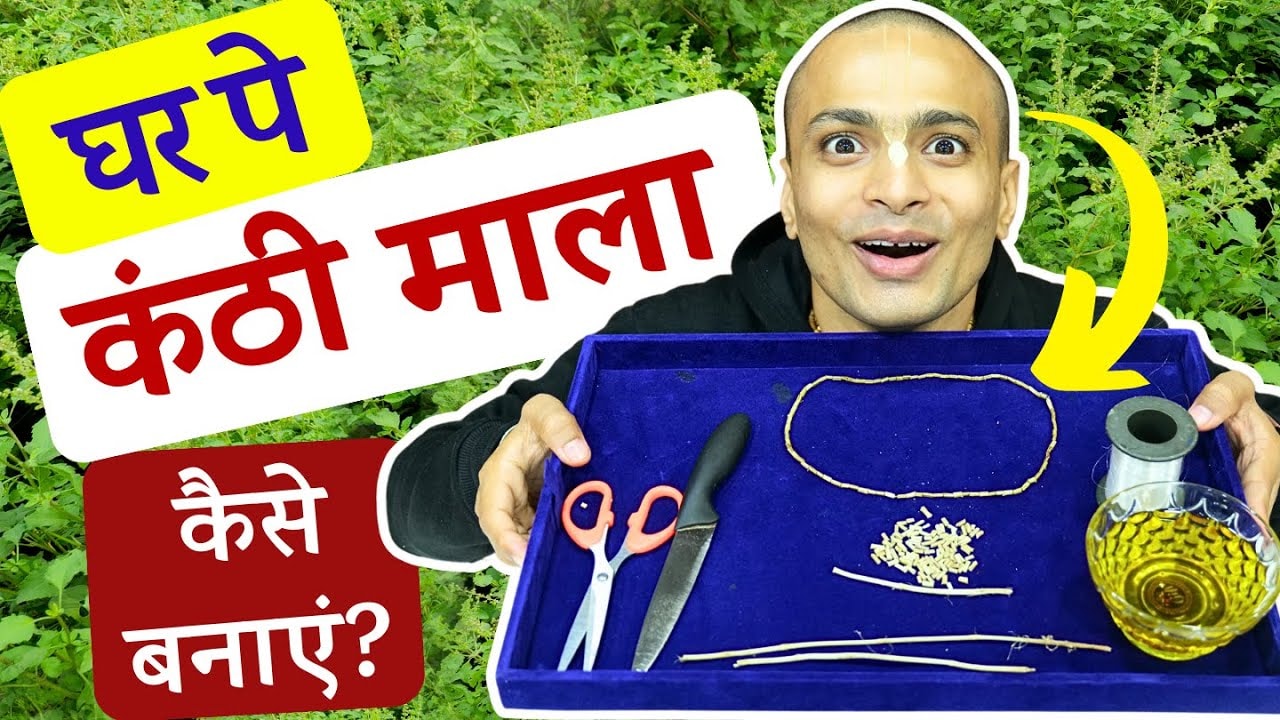
Have you ever wondered about the authenticity of the Tulsi malas available in the market? Often, we buy them, wear them, but doubt lingers in our minds—Are they truly made of genuine Tulsi wood? With numerous imitation malas flooding the market, it becomes challenging to identify the real ones. In this blog, we'll guide you through a simple process of creating your own Tulsi mala at home using basic kitchen tools.
Materials Needed
1. Fresh Tulsi plant
2. Chopping board
3. Knife
4. Needle and thread
5. Old Tulsi mala or strong thread
6. Ghee or sesame oil for softening the beads
Procedure
1. Selecting the Tulsi Plant
Start by choosing a fresh Tulsi plant. Look for one that has recently dried, ensuring the stems inside are still green. This will make it easier to pierce the beads.
2. Preparing the Tools
Gather a chakku (chopper), a needle, and a strong thread. Additionally, you'll need an old Tulsi mala or any sturdy thread for removing the knots and tightening the beads.
3. Cutting the Tulsi Beads
Trim the Tulsi plant into small, uniform pieces. Ensure they are not too thick or too thin, making it easy to insert the needle. Remove any extra leaves or stems from the beads.
4. Thread Preparation
Take a strong thread (preferably a plastic or kite string) instead of a regular thread. This will provide durability to your Tulsi mala. Cut it to the desired length, keeping in mind the size you want for your necklace.
5. Soften the Beads
To make the Tulsi beads softer and easier to string, dip them in warm ghee or sesame oil. This process will also add a shine to the beads.
6. Remove Extra Wood
Use a chakku to grind and smooth the beads. This process will remove any rough edges and enhance the appearance of your Tulsi mala.
7. Stringing the Beads
Thread the softened Tulsi beads onto the prepared strong thread, ensuring they are close together. Use an old Tulsi mala or thread to tighten the beads, removing any gaps between them.
8. Knotting the Mala
Once all beads are strung, make a tight knot at the end of the thread, leaving a small loop for the final bead. This loop will serve as a knot to secure the Tulsi mala around your neck.
9. Final Touch
Keep the completed Tulsi mala in warm ghee or sesame oil for approximately 24 hours or expose it to incense smoke. This step will add softness to the mala and eliminate any roughness.
Conclusion
Congratulations! You have successfully created your own Tulsi mala at home. Wearing a mala made with your own hands not only holds special significance but also ensures the authenticity of the Tulsi beads. Embrace the positive energy and spirituality that your homemade Tulsi mala brings into your life.
Hare Krishna Movement Ahmedabad is engaged in various charitable activities like annadanam, khichdi prasad distribution, cow protection or gau puja seva, Akashaya Patra poor children feeding program.
Apart from this charitable activities, to fullfill the mission of Founder Acharya of ISKCON, His Divine Grace A. C. Bhaktivedanta Swami Srila Prabhupada, Hare Krishna Mandir Ahmedabad conducts various spiritual and religious programs like Ratha Yatra, Janmashtami, Rama Navami, Dussehra, Diwali, Govardhan Puja etc for betterment of humanity at large.
You can make donation for khichadi prasad distribution, gau seva, gau pooja, bhagavad gita daan, ISKCON membership or various seva like lakshmi puja, mahalaya amavasya puja vidhi, pitru pooja, rajbhog seva, hindola seva etc.
Frequently asked questions
Can I cut a living Tulsi plant to make beads?
No. Only wood from a Tulsi plant that has dried naturally is used.
How can I tell if a Tulsi mala is genuine?
Real Tulsi wood is light, has a faint fragrance and fine grain. Buy from temples or trusted devotee shops.
How many strands should a kanthi mala have?
Devotees usually wear two or three tight strands close to the neck.


Comments
Be the first to share your thoughts.