
In short
A Tulsi garland is made by stringing fresh Tulsi leaves and manjaris (flower buds), gathered with respect, onto a thread to offer to Lord Krishna. Pick only what is needed, gently, after praying to Tulsi Devi, and offer the garland only to Lord Krishna or His Vishnu forms.
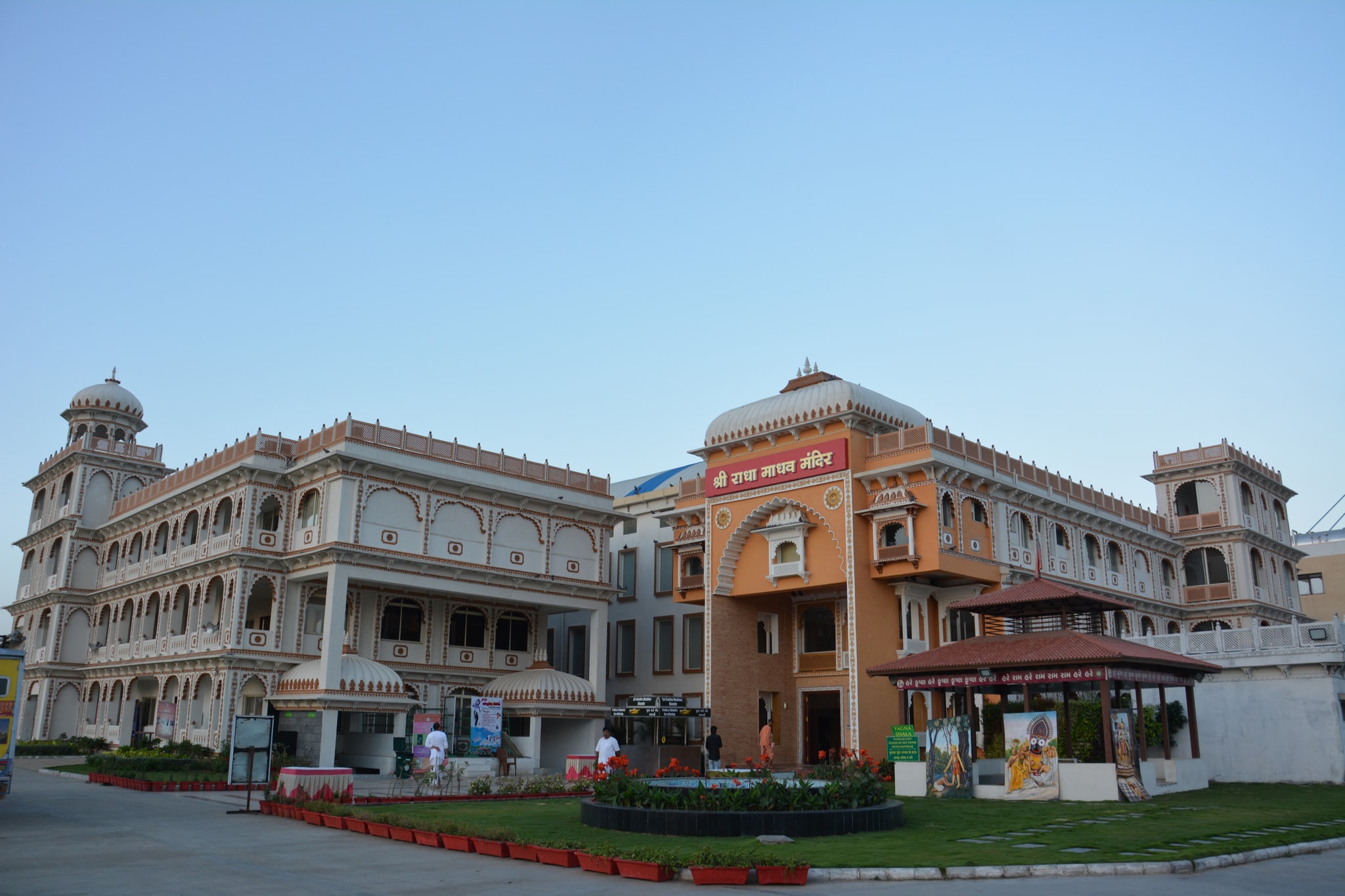
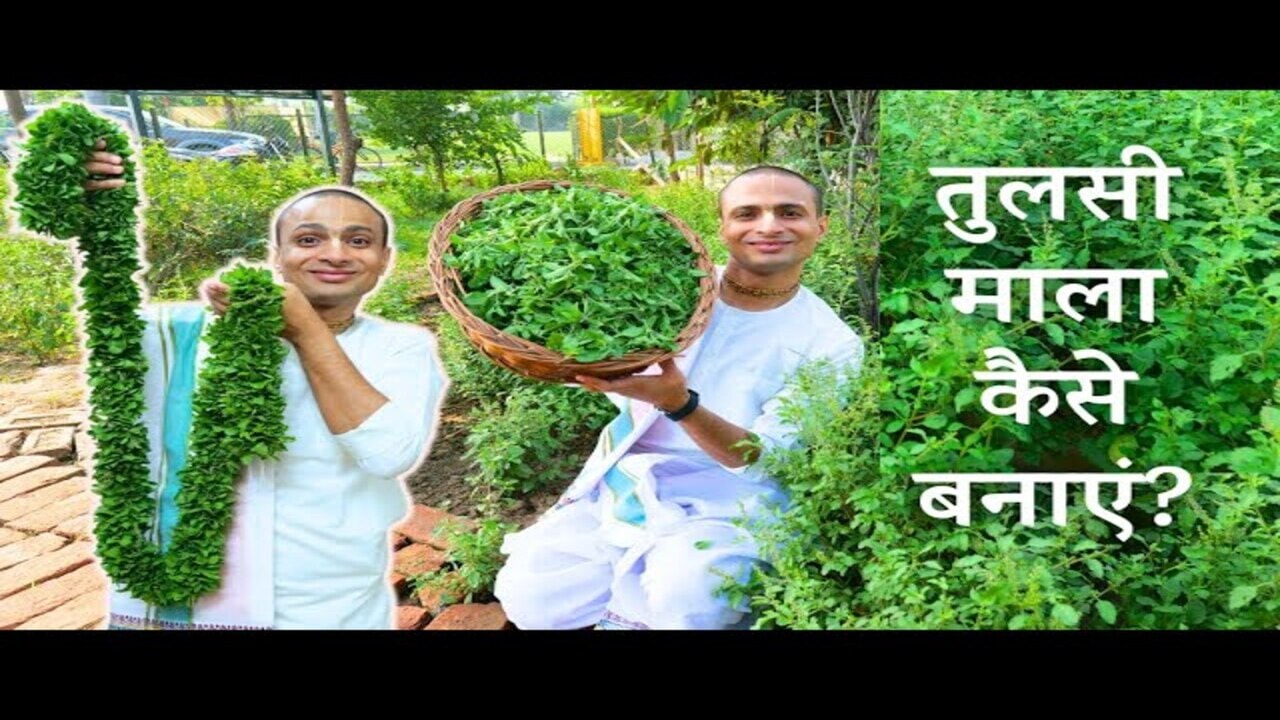
Hare Krishna! Today, I am thrilled to share my experience of crafting a Tulsi Mala at the serene Shri Radha Madhav Mandir. Join me on this spiritual journey as we explore the art of making a beautiful Tulsi bead necklace, a symbol of devotion and love for the divine.
As I entered the enchanting gardens surrounding the Shri Radha Madhav Mandir, I engaged in a heartfelt conversation with Shyamu, reveling in the beauty of the surroundings. The lush Tulsi forest in the mini temple compound caught my attention. It was a sight to behold, with Tulsi Maharani thriving abundantly.
With anticipation, I approached Tulsi Maharani, seeking her permission to collect a few leaves for crafting a Tulsi Mala. The process of crafting this sacred necklace involves not only picking the leaves but also carefully selecting small twigs or dandis for a complete and authentic experience.
With the support of Shyamu and the temple team, we spent an hour carefully harvesting Tulsi leaves. It was a labor of love, each leaf destined to become a part of the divine Tulsi Mala. As the beads are used for worshipping Lord Krishna, we handled them with utmost reverence.
Upon collecting a significant number of Tulsi leaves, it was time to prepare the beads. Unlike the traditional method involving needles, we simply used our hands to string the Tulsi beads. The small twigs or dandis were also carefully chosen and included in the process.
To enhance the life span of Tulsi beads, I immersed them in water, ensuring they were thoroughly wet. This step was crucial, especially since the following day marked Ekadashi, a significant day for offering prayers and devotion to Lord Krishna.
With the wet Tulsi beads ready, I began the process of stringing them together. Without the need for needles or threads, I simply used my hands to create a beautiful Tulsi Mala. It's essential to remember that a shorter thread (approximately 15 inches) is sufficient for a comfortable crafting experience.
A Spiritual Progress
Crafting the Tulsi Mala turned out to be a gratifying experience. As I marveled at the progress made, the beads aligned seamlessly, forming a divine necklace. The endeavor, though requiring patience, was immensely rewarding, and the sweat felt during the process only added sweetness to the fruit of my labor.
Conclusion
As I proudly adorned the Tulsi Mala the next day during Ekadashi Darshan, the sight of Lord Krishna and Radha adorned with similar divine necklaces filled my heart with joy.
Hare Krishna Movement Ahmedabad is engaged in various charitable activities like annadanam, khichdi prasad distribution, cow protection or gau puja seva, Akashaya Patra poor children feeding program.
Apart from this charitable activities, to fullfill the mission of Founder Acharya of ISKCON, His Divine Grace A. C. Bhaktivedanta Swami Srila Prabhupada, Hare Krishna Mandir Ahmedabad conducts various spiritual and religious programs like Ratha Yatra, Janmashtami, Rama Navami, Dussehra, Diwali, Govardhan Puja etc for betterment of humanity at large.
You can make donation for khichadi prasad distribution, gau seva, gau pooja, bhagavad gita daan, ISKCON membership or various seva like lakshmi puja, mahalaya amavasya puja vidhi, pitru pooja, rajbhog seva, hindola seva etc.
Frequently asked questions
Who can a Tulsi garland be offered to?
To Lord Krishna and His Vishnu forms, such as Narasimha, Rama and Jagannatha. Tulsi is not offered at the feet of other deities.
How should Tulsi leaves be picked?
Gently, with clean hands, after offering obeisances and asking Tulsi Devi’s permission, taking only what is needed.
What are Tulsi manjaris?
The small flower clusters of the Tulsi plant, which are especially dear to Krishna.
Learn more about Tulsi worship
Read the power of Tulsi Devi and the Tulsi aarti guide.


Comments
Be the first to share your thoughts.